Global Campus and Right Livelihood: Learning with Change-makers
On 1 August 2019, the Global Campus of Human Rights and Right Livelihood entered into a long-term partnership to strengthen human rights education, with a particular focus on the promotion of children's rights. The partnership brings together the Global Campus' international network of universities, students, alumni and human rights professionals with the unique experience of Right Livelihood Laureates—the courageous individuals and organisations honoured and supported by Right Livelihood for advancing practical and visionary solutions to the world's most pressing challenges.
Laureates in Education and Dialogue
While children’s rights remain at the heart of the Global Campus-Right Livelihood collaboration, the partnership also addresses a broad range of human rights issues, reflecting the diversity of the Laureates’ work and the Global Campus’ commitment to interdisciplinary human rights education. Together, the two organisations create opportunities for children and young people, students, alumni, academics, practitioners, activists in exile and wider audiences to engage directly with those who are shaping positive change around the world.
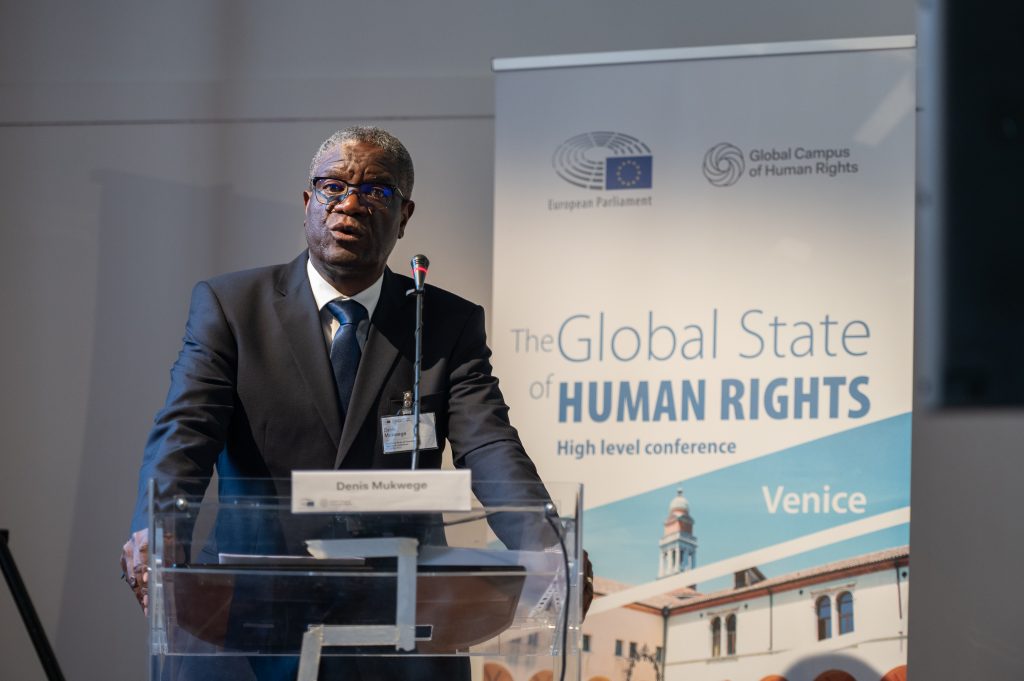
Right Livelihood Laureates regularly contribute to the educational and research life of the Global Campus through lectures, webinars, conferences, MOOCs, podcasts and other learning initiatives. By bringing first-hand experience into academic settings, they help connect human rights theory with the realities of defending rights and promoting social change around the world.
Collaborating with students and alumni
The partnership is built on collaboration rather than one-way knowledge transfer. Laureates work alongside Global Campus students, alumni and staff on regional and cross-regional initiatives, contributing their expertise, providing strategic advice and helping shape projects that respond to real-world human rights challenges.
Examples include projects on children’s rights and disability inclusion, environmental justice, transitional justice, democracy education, the rights of indigenous peoples, gender equality, and and the wider protection of human rights defenders. Laureates have also participated in the Alumni Skills Exchange Series, sharing practical lessons on grassroots environmental advocacy, LGBTQI+ rights, community empowerment and feminist movements that have been captured in publications and learning resources for the wider human rights community.
Research, mentoring and public engagement
Alongside their contributions to teaching, learning and collaborative projects, Laureates contribute to research, publications and public dialogue across the Global Campus network. They participate in thematic workshops and roundtables, support the development of toolkits and educational resources, engage in interviews and the Human Rights Preparedness Blog, and contribute to conferences, schools and public events. Their engagement enables students, researchers and practitioners to learn directly from those who have developed innovative responses to some of the world’s most pressing human rights challenges.
The partnership also encourages sustained engagement through the Global Campus–Right Livelihood Fellowship Scheme. Each year, selected Global Campus students undertake master’s research in collaboration with a Laureate organisation, benefiting from expert guidance throughout the research process before completing a funded post-graduation internship with a Laureate or partner organisation. By linking academic research with practical experience, the Fellowship supports the next generation of human rights professionals while strengthening the exchange between academia and practice.
A Growing Community of Practice
As the partnership continues to evolve, Right Livelihood Laureates remain at its centre—not simply as distinguished award recipients, but as collaborators, mentors and partners in learning. Together with the Global Campus community, they are helping to build a global community of practice committed to human rights, democracy, environmental sustainability and social justice through dialogue, research, education and collective action.