The exhibition opened with a reminder that human rights are not abstract principles confined to treaties, but shape the daily realities of communities across the region. Whether it is extreme air pollution, rising sea levels, widening digital surveillance, or the emotional strain faced by university students, the students argued that rights-based solutions must involve everyone: governments, universities, civil society, and young people themselves.
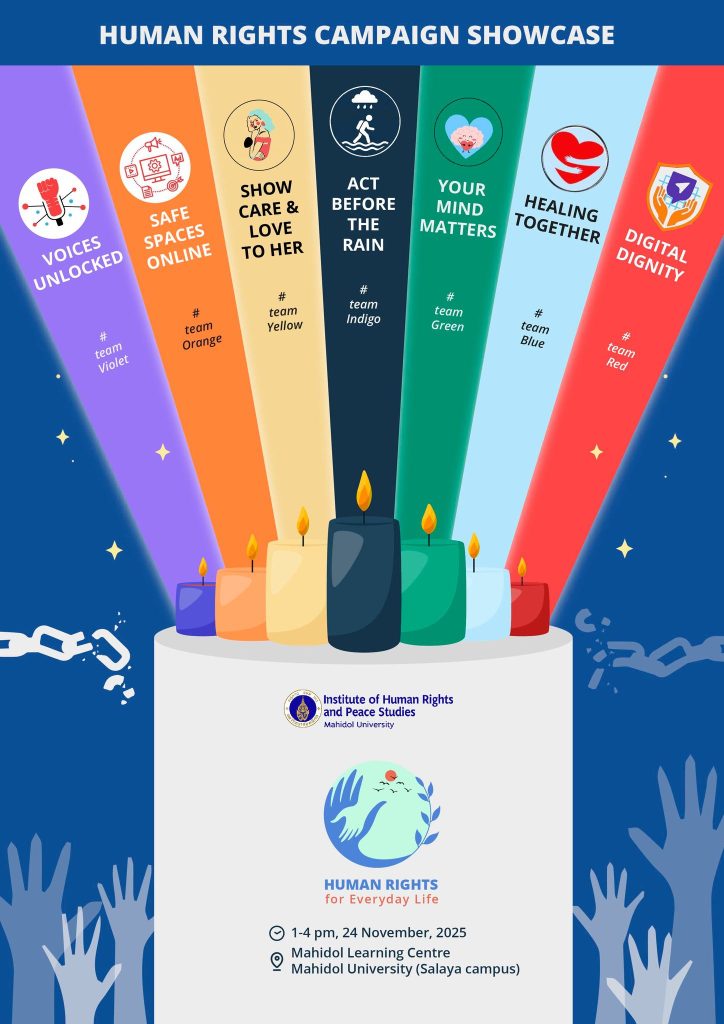
Seven student-led campaigns addressed some of the most urgent and overlooked human rights concerns affecting young people today:
Mental health on campus: an essential part of the right to education
One group focused on the link between mental health, academic success, and students’ broader right to good health.
Their campaign noted that while Mahidol University offers mental health services, many students do not use them—likely due to stigma, lack of awareness, or insufficient institutional support. To better understand how Mahidol students perceive mental health needs and preferred support mechanisms, the team designed interactive games during the exhibition. The information collected will be shared with faculty in hopes of influencing future campus policies. The group also proposed introducing mental health as a compulsory subject to strengthen early intervention, promote empathy, and normalize conversations about well-being within university life.
Supporting students from conflict zones
Following the interruption of several international scholarship schemes after the dissolution of global funding support programs, many students from conflict zones (and especially Myanmar) have faced severe financial strain and emotional stress. To respond to this, the team piloted a peer-led support initiative, including a workshop and the formation of a confidential, in-person support group emphasizing trust, cultural sensitivity, and empowerment. Their goal is to create a sustained network where affected students can find solidarity, share coping strategies, and access emotional support within the Mahidol community.
Climate justice: rights in the age of rising seas and umbreathable air
A team decided to bring attention to climate injustice—particularly the unequal impact of environmental degradation on vulnerable populations. The group highlighted how extreme air pollution, increasingly frequent floods, and unsafe living conditions jeopardize basic rights to health, shelter, and livelihood. Their exhibit called on policymakers, universities, and community actors to play a stronger role in climate mitigation and adaptation. They argued that meaningful climate action requires not only technical responses but also a strong human rights lens to ensure that no group is left behind in the transition.
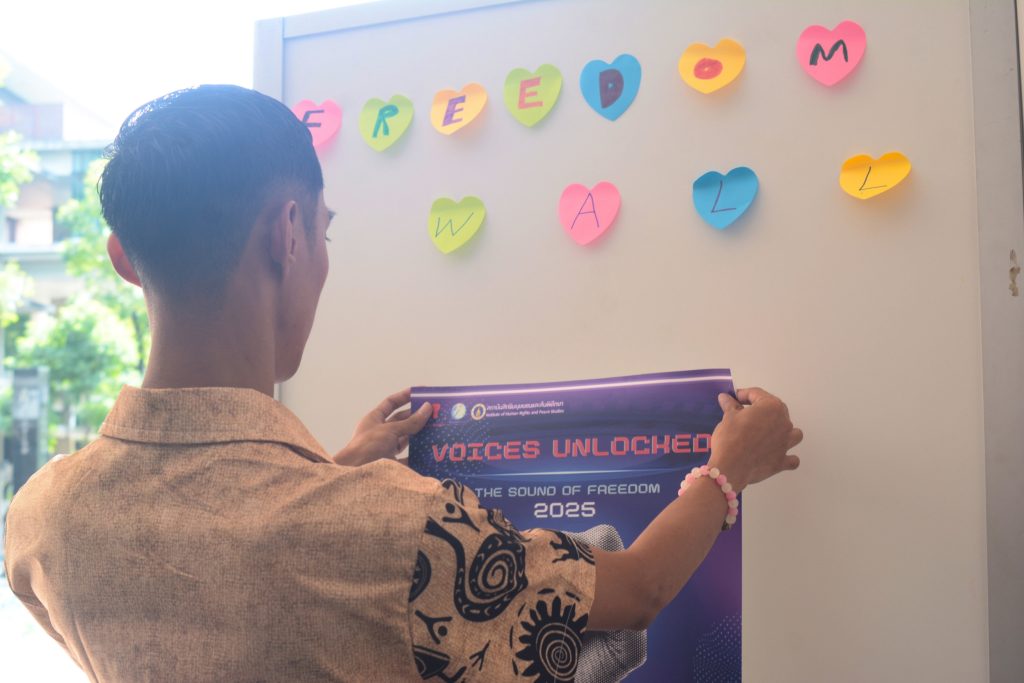
Digital freedom: “Voices unlocked – Sound of freedom”
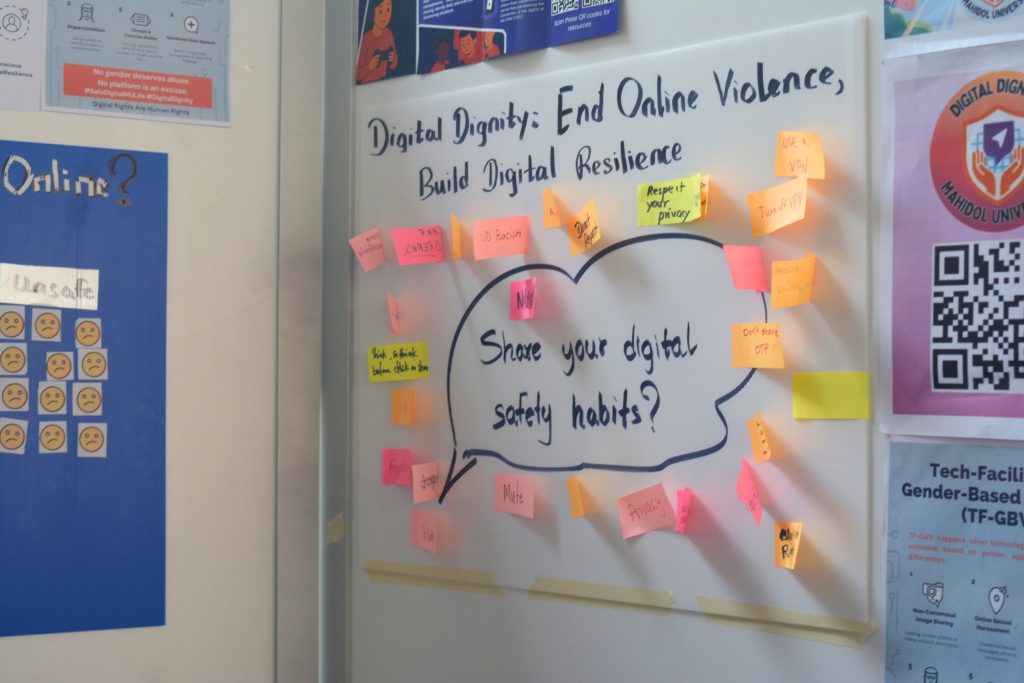
A striking visual campaign explored digital rights and the shrinking space for online expression. With a symbol of a microphone shaped like a raised fist, two teams emphasised how digital platforms have become both essential channels for youth engagement and risky spaces where censorship, surveillance, and harassment are growing. The campaign gathered personal testimonies from young people across ASEAN on their experiences with expressing themselves online. Through these stories, the students sought to highlight the fragility of digital freedom and the need for stronger protections that allow people—especially youth—to speak without fear.
#SafeSpacesOnline: addressing sexist cyberbullying
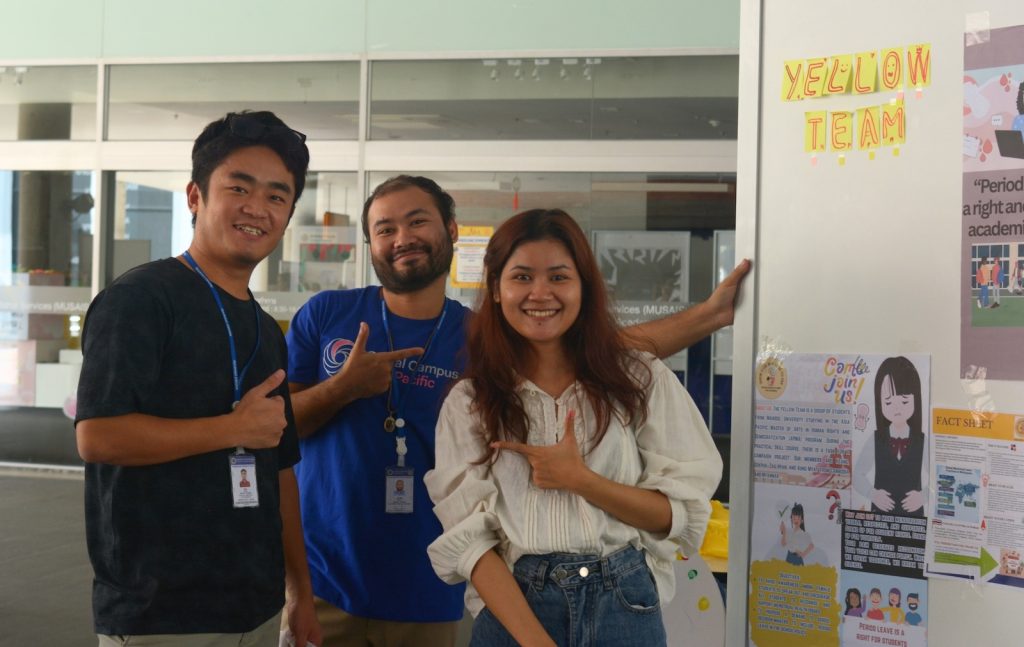
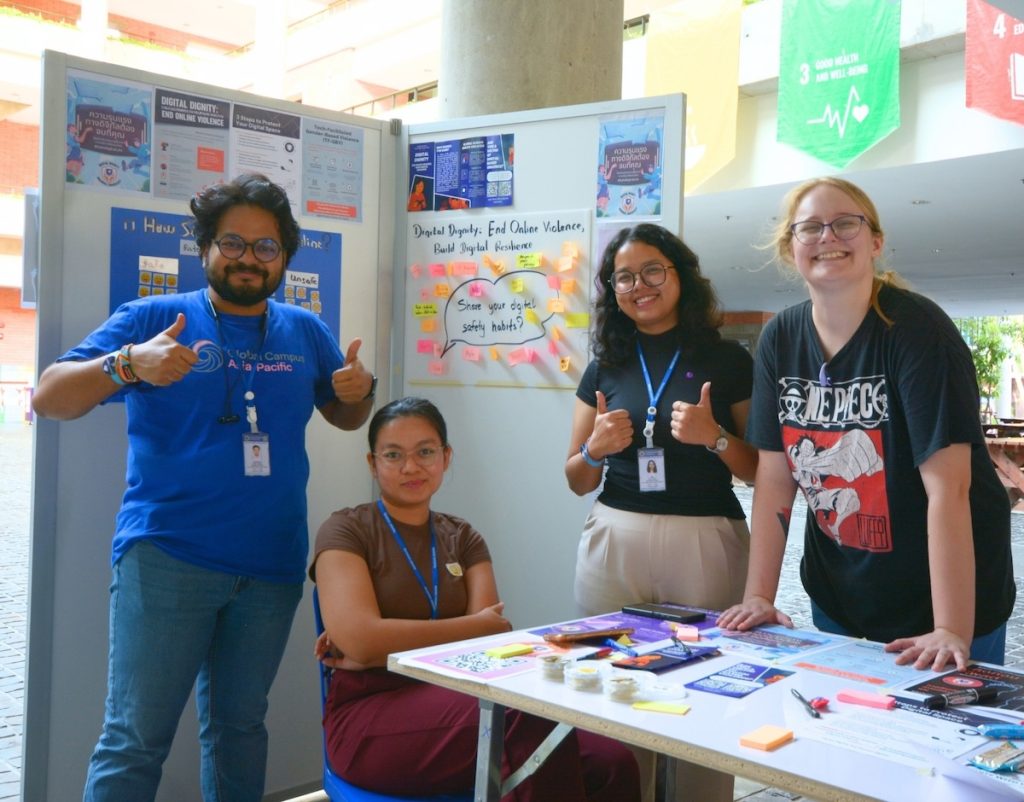
This campaign tackled sexist cyberbullying through an encouraging, youth-friendly approach. On 24 November, two teams ran an interactive booth inviting participants to write examples of “good” and “bad” online comments they had encountered. The activity drew steady crowds and sparked thoughtful conversations. Many participants shared personal stories, revealing patterns of body-shaming, sexualized insults, and subtle gendered remarks. The students noted that naming these experiences helped individuals recognize sexist cyberbullying as a form of harm, not a normal part of digital life. The activity also promoted empathy by encouraging participants to reflect on how words affect emotional well-being.
Across all seven campaigns, the message was clear: human rights are lived realities shaped every day by environmental conditions, digital access, mental health, and the socio-political contexts students carry with them. The APMA students hope their campaigns will ignite deeper conversations on campus and contribute to long-term policy changes that make Mahidol University a safer, more inclusive, and more rights-respecting space for all.
—–
With thanks to the students from the Asia-Pacific Master of Arts in Human Rights and Democratization (APMA) and the Master of Arts in Human Rights (MAHR), who drafted this piece under the supervision of Dr. Mst Umme Habiba Fahmina Karim, Lecturer at the Institute of Human Rights and Peace Studies, Mahidol University, Thailand
Photos by Chu Nguyen Gia Anh, APMA student 2025