
This year, GC South East Europe / ERMA students were hosted by 22 organisations spread across seven countries in the western Balkans, representing a broad cross-section of civil society, media, research and public institutions active in the field of human rights and democratic development.
“The internship enables students to take their academic knowledge into the field — gathering data for their thesis, building professional networks, and navigating an intercultural working environment in a country other than their own. They meet peers from other regional countries, participate in different initiatives and enjoy meeting and spending time with their peers from the region, exchanging and comparing their experiences.”
A cornerstone of the ERMA experience
The four-week internship is a mandatory, credit-bearing component of the programme’s second semester, worth 7 ECTS. What makes the ERMA placement distinctive is a firm rule: students must complete their internship in a country other than their own—a deliberate design choice aimed at fostering intercultural competence, adaptability and the kind of professional mobility demanded of experts working across the region.
Students select a host whose work aligns with their MA thesis topic, making the internship simultaneously a professional placement and a research expedition. The data gathered, the interviews conducted, and the institutional contacts made during these four weeks directly feed into the thesis writing period that follows in June and July.
Beyond research, the placement period is designed to accelerate students’ professionalisation: sharpening analytical skills, situating academic knowledge within real organisational contexts, and building the professional networks that will sustain careers in human rights work long after graduation.
A diverse host ecosystem
This year’s cohort was dispersed across a notably wide geography, reflecting the programme’s longstanding commitment to regional mobility. The 22 host organisations span seven countries, with Serbia hosting the largest number of placements followed by Montenegro, Bosnia and Herzegovina (BIH) and Croatia. They reflect the programme’s deliberately pluralist understanding of where human rights work happens and can be broadly grouped into several categories.
1. Human rights and civil society organisations form the backbone of the network, including the Helsinki Committee for Human Rights in Serbia, Sarajevo Open Center in BIH, Civic Alliance in Montenegro, and CESI – Center for Education, Counseling and Research in Croatia. These organisations provide students with direct exposure to advocacy, monitoring and litigation-adjacent work at the heart of regional democratic life.
2. Research and policy institutes also feature prominently. Institut Alternativa and the Institute for Advanced Studies in Montenegro, CREDI in BIH and Tiiiit! Inc. in North Macedonia offer environments oriented towards policy analysis, think–tank research and social science inquiry—environments well-suited to students whose thesis work requires primary data collection and institutional access.
3. The media sector is represented through BIRN Serbia (Balkan Investigative Reporting Network), Mediacenter Sarajevo, and Impress Croatia — organisations at the intersection of journalism, public accountability and freedom of expression. In a region where press freedom remains a contested terrain, these placements carry particular resonance.
4. Gender rights and women’s leadership are also reflected in the programme: BEFEM and Women on Boards Adria (WOBA) in Montenegro bring a feminist and equality-oriented lens, while Rainbow Ignite in Serbia engages with LGBTQ+ rights and inclusion.
During my internship at Women on Boards Adria, I worked on research related to women’s representation in corporate governance and decision-making positions in Montenegro. Being based in Montenegro enabled me to gain a better understanding of the local context, establish contacts with relevant stakeholders, and conduct in-person interviews for my research. It also provided valuable insight into the country’s EU accession process, gender equality framework and corporate governance environment.
Hana Granulo, BIH
5. Social and community-focused organisations round out the picture. Artpolis in Kosovo works at the intersection of arts and human rights, while Communication for Social Development (CSD), also in Kosovo, focuses on social change communication. Danski dom in Montenegro provides specialised support to children with developmental disabilities — a placement that deepens understanding of socioeconomic rights, disability rights, and social welfare systems. The Sombor Educational Center and the Balkan Migration and Displacement Hub (hosted by Save the Children in Serbia) address education and forced displacement, respectively, while the History Museum of Bosnia and Herzegovina offers a unique cultural-institutional lens on memory, identity and transitional justice.
My stay in Sombor provided valuable insight into local community life, youth engagement, and civic participation. Through the internship organization, I gained access to students and young people who became participants in my research. I also had the opportunity to observe ongoing student protests and social movements, which offered an important perspective for understanding contemporary social and political developments in Serbia. The internship helped me gain a broader understanding of the country’s political context, social dynamics, and recent history through conversations with residents and colleagues, which I find really valuable.
Lejla Alihodžić, BIH
6. Radio Rojc Alliance in Croatia, a civic radio and community centre with a long tradition of supporting civil society, and Polekol in Serbia further extend the network into grassroots and cultural spaces.
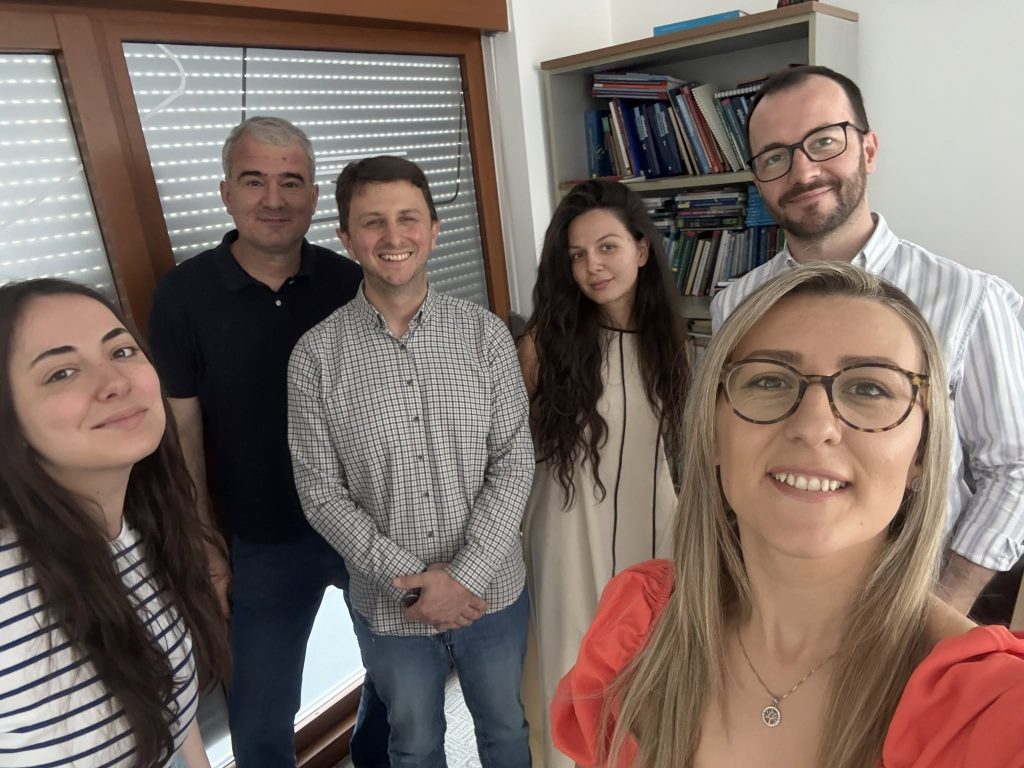
What comes next
ERMA students are now entering the final and, in many ways, most intensive phase of their year: thesis writing. In June and July, the cohort travels to the University of Bologna’s residential centre in Bertinoro, a medieval hilltop town in Emilia-Romagna, where they will transform their field research into master’s dissertations. Short seminars and lectures complement the writing process, and students benefit from individual guidance from programme tutors—typically drawn from the ranks of recent ERMA graduates—as well as access to Bologna’s library and research facilities.
Final theses are submitted by early September, with defences held at the University of Sarajevo in October. Upon successful completion, students receive a double-degree diploma from both the University of Sarajevo and the University of Bologna, along with 60 ECTS.
Since its founding, the ERMA programme has placed students with more than 100 partner organisations from Albania, Bosnia and Herzegovina, Bulgaria, Croatia, North Macedonia, Kosovo, Montenegro, Romania, Serbia and Slovenia — a network that has grown organically through years of collaboration and that continues to expand with each cohort. Applications for the academic year 2026/27 are currently open!
ERMA, including its annual internship programme, is co-financed by the European Union.