
Together with
Date & Place
12-17 October 2026
Chisinau, Republic of Moldova
Cost
Free of charge for target groups
Application Deadline
10 August 2026 for international applicants
17 August 2026 for applicants based in Moldova
Selection Criteria
Proven interest in human and environmental rights
Strong motivation
Co-funded by
An innovative academic initiative bridging theory and practice on human rights, climate change, and sustainable development in the Eastern Partnership, Caucasus, and South-East Europe regions.
Overview
The School is an intensive residential programme jointly organised by the Global Campus of Human Rights and the State University of Moldova in the framework of the GC Caucasus regional programme.
Bringing together students, young professionals, researchers, civil society actors, and emerging leaders from across Eastern Partnership countries, the Western Balkans, and the wider European region, the School explores the interconnected challenges of climate change and human rights through an interdisciplinary and practice-oriented lens.
Co-hosted by Human Rights Education Lab at the State University of Moldova, the programme provides participants with a unique opportunity to engage with leading academics, practitioners, policy experts, and activists. Through interactive learning, dialogue, and peer exchange, participants will examine the theory and practice of contemporary climate governance, climate-related drivers of migration, environmental sustainability, and human rights-based approaches to mitigation and adaptation. The School aims to strengthen knowledge, foster regional cooperation, and empower a new generation of climate action ambassadors committed to sustainable and rights-based solutions in the EU enlargement area.
Faculty
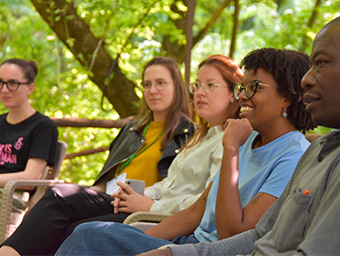
Students will connect with and learn from leading academics and practitioners from Global Campus universities, partner institutions, and regional civil society organizations
Coordination
About the School
The School aims to equip participants with the introductory knowledge, analytical tools, and practical skills necessary to understand and address the human rights dimensions of climate change and climate action.
Participants will:
- Develop an understanding of the links between climate change, human rights, sustainable development, and social equity.
- Analyse international, European, and national climate governance frameworks from a human rights-based perspective.
- Explore climate-related drivers of migration, displacement, and conflict, with particular attention to regional dynamics in the EU enlargement area.
- Develop capacity to assess climate policies, adaptation measures, and mitigation strategies through principles of participation, accountability, and justice.
- Gain practical skills in advocacy, communication, stakeholder engagement, and climate action initiatives.
- Build cross-regional networks and collaborative approaches to advancing sustainable and rights-based responses to climate challenges.
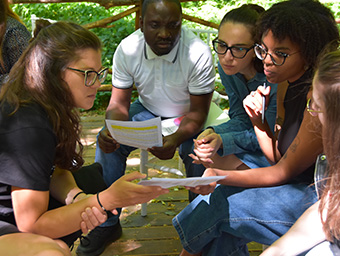
The School combines academic insight with participatory and experiential learning methods designed to promote critical reflection and practical engagement.
Participants will engage in:
- Interactive lectures delivered by leading academics, practitioners, and policy experts.
- Facilitated discussions and peer-learning sessions drawing on diverse regional experiences.
- Practical workshops focused on climate action, advocacy, communication, and policy analysis.
- Case studies examining current challenges related to climate governance, migration, sustainable development, and environmental protection.
- Field-based learning activities connecting theoretical concepts with local realities and environmental initiatives.
- Collaborative group exercises fostering teamwork, networking, and the co-creation of innovative solutions.
The School is organized as a seven-day residential programme combining expert-led teaching sessions, interactive workshops, panel discussions, and field-based learning. The curriculum progresses from foundational concepts on climate change, human rights, and climate governance and justice to applied topics such as climate action, migration, policy development, advocacy, and communication. Participants will also engage in collaborative group work, networking activities, and a field visit that connects classroom learning with environmental and social realities in Moldova. Successful participants will receive a certificate of completion based on full attendance and active participation in group work and exercises.
Fluency in written and spoken English is a prerequisite for eligibility – minimum level B2, as per the Common European Framework of Reference.
This School is open to applicants with little or no previous knowledge of the subject.
Eligible participants are university students and graduates from any discipline, early-career professionals, local policy makers, researchers, and emerging environmental rights defenders or practitioners from Moldova (10 positions), Eastern Partnership countries (Armenia, Ukraine, Georgia – 4 positions), the Western Balkans (BiH, Serbia, Montenegro, Albania, North Macedonia, and Kosovo – 3 positions) and EU citizens (3 positions) who want to gain an introductory understanding of the subject, or aim to expand their basic expertise.
Global Campus alumni from GC Europe/EMA, GC South East Europe/ERMA and GC Caucasus/CES holding citizenship from these countries are encouraged to apply.
Class size: limited to 20 participants to foster peer networking and maximise opportunities for direct interaction and personalised feedback from the experts.
Selection criteria:
- Proven interest in human and environmental rights-related issues
- Motivation: i) your reasons for applying ii) what you expect to gain iii) learning expectations and future application
Evaluation: Global Campus reserves the right to select participants based on their academic and professional profile, and to ensure the creation of a balanced student body, considering gender, age and regional representation.
The School is free of charge. Moreover, all accommodation and stay costs are covered by the organisers and include.
In light of GC Environmental Policy, for international or long-distance travel, we strongly encourage prioritising travel options that minimise environmental impact. International travel will be directly organised by the Global Campus (airfare booking). Costs of other travel modes will be reimbursed after the event.
Our work with the State University of Moldova
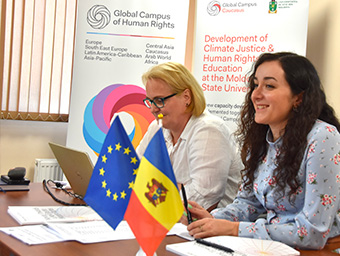
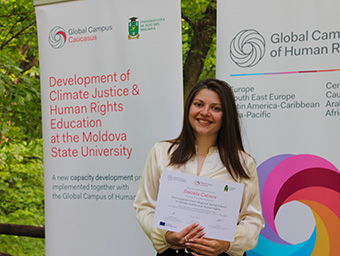
The School is part of the long-term cooperation between the Global Campus of Human Rights and the State University of Moldova (USM) in the framework of the Global Campus Caucasus regional programme. Since 2023, this partnership has supported the strengthening of human rights education at USM through curriculum development, academic capacity building, international exchanges, and innovative educational initiatives.
A key outcome of this collaboration is the establishment of the JURIS Lab – Research and Education on Human Rights and Sustainable Development, an interdisciplinary platform bringing together the Faculties of Law and Biology to advance research, education, and public engagement on human rights, climate change, and sustainable development. The School serves as the Lab’s flagship international learning initiative, fostering regional cooperation and empowering emerging leaders to address contemporary climate and human rights challenges.
Location & Venue
The School takes place in Chișinău, the capital of the Republic of Moldova, a city situated between different historical, political and cultural geographies. Chișinău offers a meaningful setting for a programme exploring climate action, human rights, environmental protection and international governance. Its recent trajectory – shaped by democratic reform, European integration, energy vulnerability and environmental challenges – provides a relevant context for reflecting on the links between climate justice, institutions and human dignity.
The programme will be hosted at the Institutul Muncii / Labour Institute, a USM partner, where participants and faculty will also be accommodated. As a training and conference venue connected to adult education, labour issues and social dialogue, the Institute offers a practical residential setting for learning, exchange and group work. Located in a green and quiet area, surrounded by park-like spaces, it provides a welcoming environment that is well suited to study, reflection and community-building. This combination of academic focus, residential learning and proximity to nature creates a conducive setting for meaningful discussion and collective engagement.
Discover more about Chișinău here.
What to watch
Global Campus of Human Rights: Educating Tomorrow's
Experts in Human Rights and Democracy
Development of Human Rights Education
at the Moldova State University
Focus on GC Caucasus in our GC Annual Report “Persistence
of Frontline Human Rights Educators”
Cross-Regional School on Climate Action and Human Rights
This project is part of the GC Capacity Development programme.
Contact us
GC Capacity Development Department:
Email: capacity.development@gchumanrights.org
Telephone: +39 041 2720 911 int. 148