
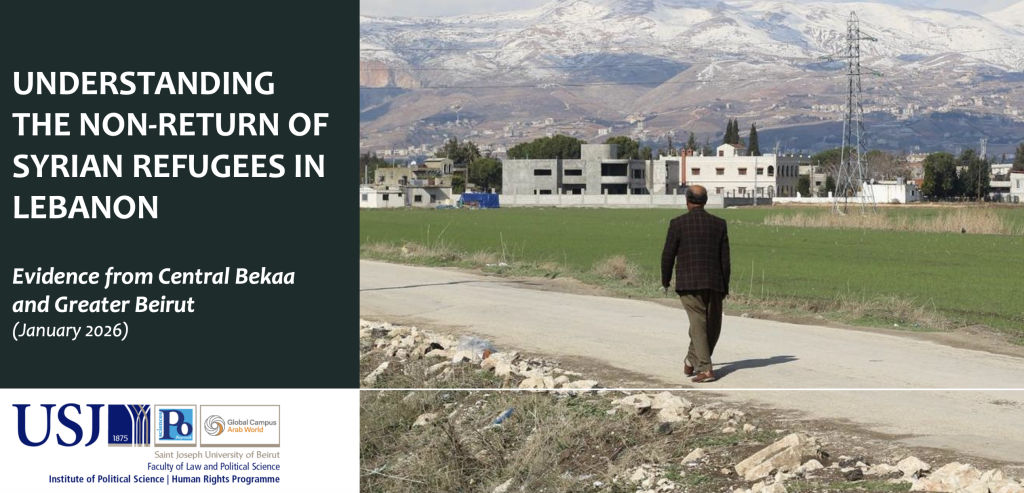
Under the leadership and supervision of Dr Elias Dahrouge, one of the ArMA instructors, and through fieldwork conducted in January 2026 in Greater Beirut and Central Bekaa, the study combines 537 surveys and 25 key informant interviews to explore how return decisions are shaped by a mix of personal, social, political, economic and structural pressures.
One of the study’s most striking findings is that 64 per cent of Syrian refugee respondents said they did not intend to return, while only 11 per cent expressed their willingness to do so within the next 12 months. The report argues that non-return cannot be explained by security concerns alone. Instead, it finds that refugees’ intentions are shaped by the interaction of multiple factors affecting both their willingness to return and their practical ability to do so.
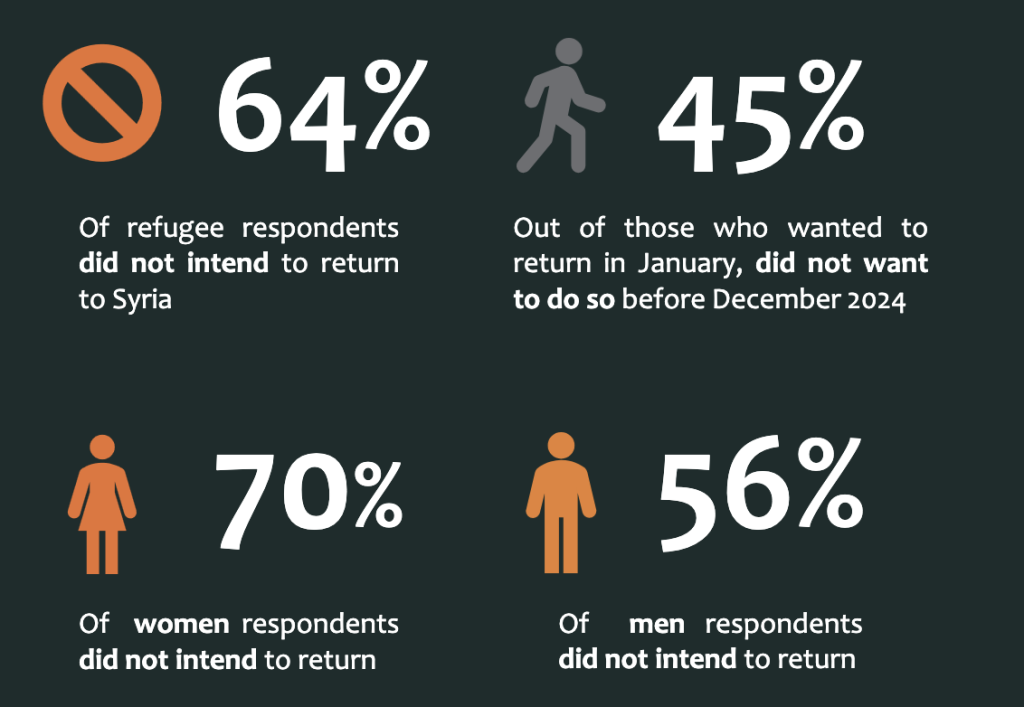
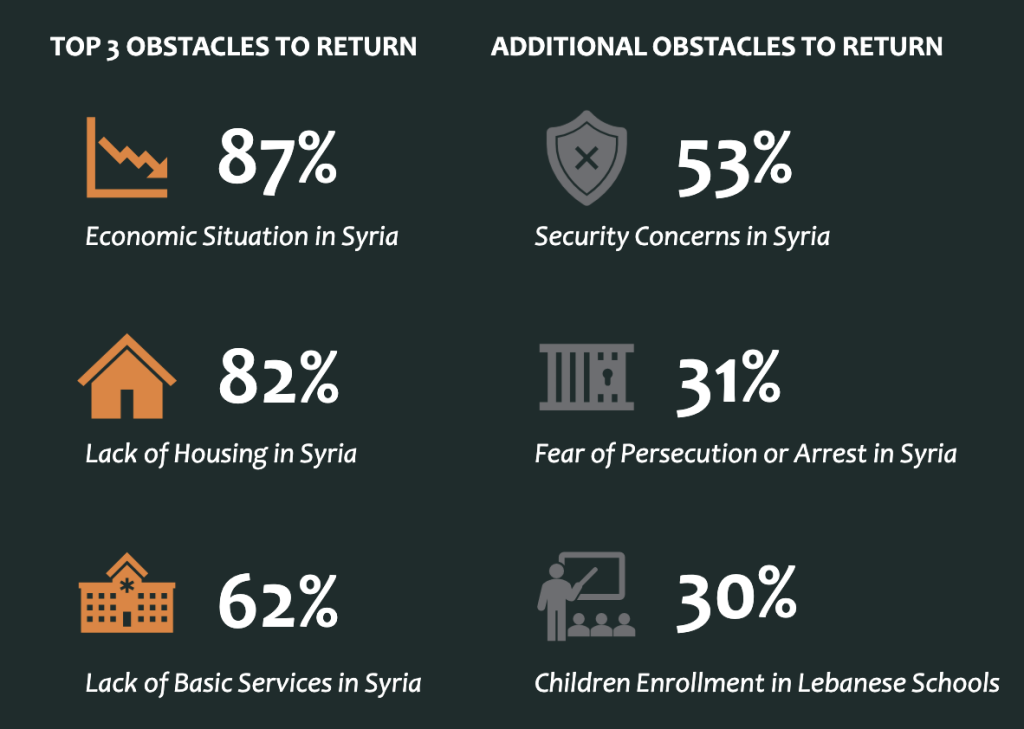
Several of these determinants of return stand out. Women were less likely than men to want to return, parents were more cautious than respondents without children, and perceived risks inside Syria remained a major obstacle. Confidence in Syria’s transitional authorities, expectations regarding access to basic services, and relations with host communities in Lebanon also strongly influenced responses. Economic conditions, housing, education, employment, income and documentation mattered too, though often in more indirect ways.
The report also evaluates the Government of Lebanon–UNHCR return programme launched in summer 2025. It argues that the programme suffers from limited awareness, weak incentives and a poor fit with refugees’ actual needs, especially because many respondents still wanted the option to assess conditions in Syria before deciding on return.
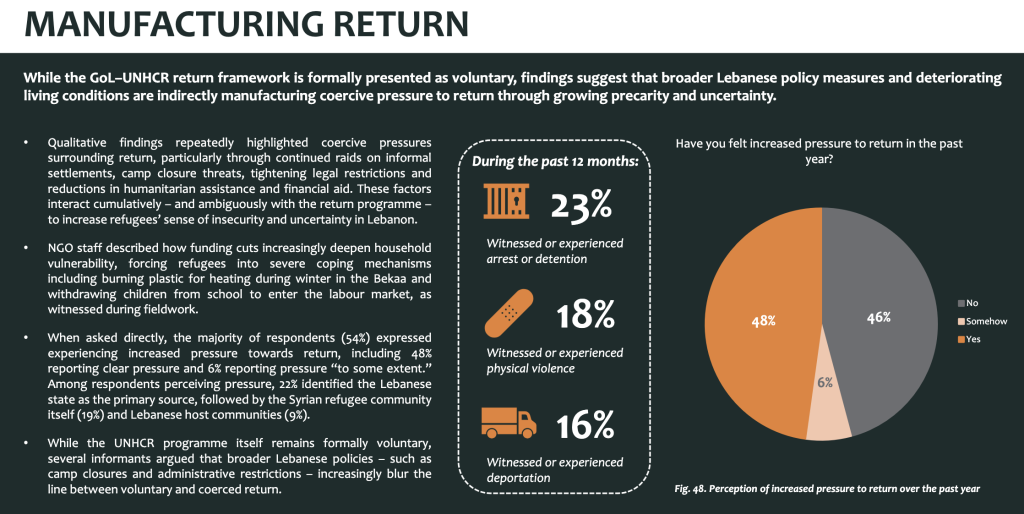
Overall, the report concludes that sustainable return policy must address the full range of realities shaping refugees’ choices, not security change alone.
Read the full report here: https://doi.org/10.25330/3182
The field research project that led to the report’s findings was conducted as part of ArMA’s applied research curriculum in democracy and human rights.