
Today, the right to gender identity is protected under international law and recognised in Pakistan’s Constitution. Despite this, transgender persons continue to struggle for their rights to a self-perceived identity and to live with dignity.
Transgender men and non-binary individuals in Pakistan who are assigned female at birth (AFAB) face resistance on two fronts: the state that does not recognise their self-perceived identity and their conservative family, which perceives them as heterosexual, cisgender women. Caught between these two forces, the violence committed against them goes unreported, unacknowledged by the state, and unrecognisable in their homes. Without documentation of their experience, they remain invisible to the legislation and policies pertaining to the Transgender people of Pakistan. Understanding this invisibility requires an examination of the broader social and structural disparities that influence the lives of AFAB people in Pakistan.
The structural gender disparity is evident in international rankings; Pakistan ranks last among 148 countries in the World Economic Forum’s 2025 Global Gender Gap report, with a gender parity score of 56.7 percent. The culture of honour killing is already widespread; the Human Rights Commission of Pakistan confirmed 405 honour killings of AFAB individuals in 2024. Gender diverse (AFAB) people may experience the same challenges as cisgender women, yet existing legal frameworks have failed to account for their distinct experiences.
The Pakistani Parliament unanimously passed the Transgender Protection Act in 2018, granting transgender individuals the right to and protection of a self-perceived identity without the need for a medical certification related to gender identity. However, in 2023, the federal Shariat Court declared that the right to self-perceived gender identification was un-Islamic, claiming that transgender people can only be born with ambiguous genitalia and/or conditions that fall under the umbrella of intersex; social and medical transitioning in other cases, allegedly, violates Islamic principles, consequently depriving transgender and non-binary people of legal protection and identity that aligns with their gender.
This legal gap makes the Convention on the Elimination of All Forms of Discrimination against Women (CEDAW) a critical tool. Although CEDAW does not explicitly mention transgender and gender diverse people, CEDAW Committee’s general recommendations provide a strong framework for their protection. As a state party to CEDAW, Pakistan carries this obligation, even though these recommendations are not legally binding.
The Government of Pakistan, however, has concerns about certain interpretations of CEDAW, which it says are inconsistent with Islamic norms and cultural values, particularly those relating to gender and sexual minorities. Notably, the right to a legal identity is a basic human right that is mentioned in most human rights treaties that Pakistan has ratified and signed. However, Pakistan does not recognise the legal identity of gender diverse AFAB persons and transgender men, leaving them without the protections these treaties are meant to guarantee.
Most Pakistanis lack an understanding of gender diversity. However, it is important to note that this lack of understanding can be observed regarding gender diversities of AFAB persons exclusively. For instance, transgender women, also known as ‘Khwaja sira’, are an indigenous identity accepted due to their historical presence on the Khwaja sira, or transgender women’s identity, which is recognised by the state and society, and they have a separate welfare program and policy centre to address their experiences and problems. Transgender men, in contrast, are rarely mentioned in public conversation, legislation, or policy.
Transgender men and non-binary AFAB individuals have the same restrictions as cisgender women. These may include limited freedom of movement, pressure to be feminine, and expectations about marriage and running a household, in addition to being deprived of government protection and basic rights for self-perceived identity. Many AFAB people face restrictions on their social mobility, not only due to concerns about safety and harassment in public spaces, but also because of a deeply entrenched protective mindset based on family beliefs and societal conventions that regard the female body as something to be protected. Transgender men’s invisibility in public life and policy is further exacerbated by these layered constraints, which prevent them from publicly expressing their identity or taking part in political mobilisation. Together, these social, legal, and cultural dynamics result in structural invisibility for transgender men and non-binary AFAB people in Pakistan, where their identities are marginalised in both legal recognition and public discourse.
Legal recognition and the limits of self-perceived identity
The Transgender Protection Act of 2018 grants transgender people the right to self-perceived identity; nevertheless, the received identity has been challenged as a result of a ruling of 2023 by the Federal Sharia Court’s (FSC), which restricts access to legal identification for transgender people. The ruling has been appealed in Pakistan’s Supreme Court, where it remains under consideration. However, even prior to the FSC judgment, the identity card offered under self-perceived identity was the X ID card, which indicates the third gender identity. Transgender men and transgender women identify as men and women, respectively, and choose to have a male or female ID card. Transgender men reject the X ID because it refuses to indicate and acknowledge their actual identity as men. Furthermore, obtaining an X ID does not ensure the right to marry, a fundamental human right.
‘Forced marriage: one of the least discussed forms of violence against transgender men’
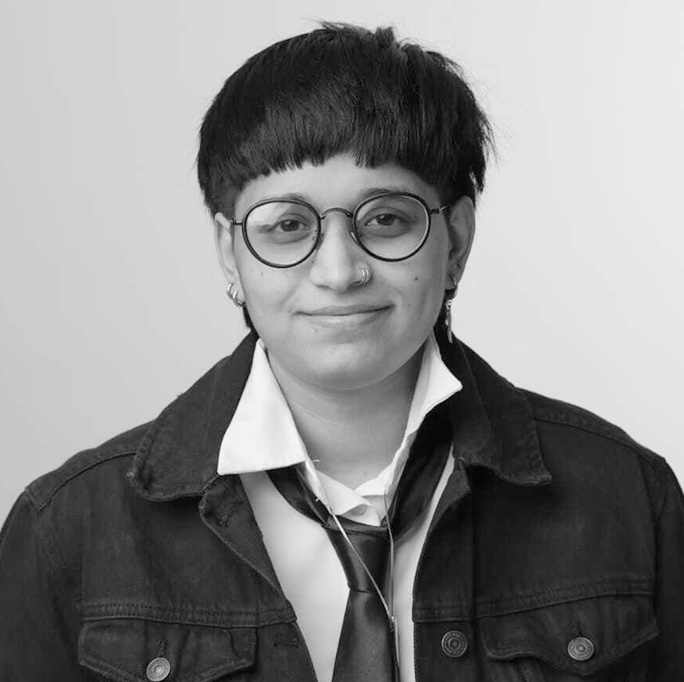
For this blog, I spoke with Ray, a comrade and co-founder of the Trans Masculine Alliance Pakistan, who works directly with transgender men and AFAB gender diverse individuals in Pakistan.
Ray explained that forced marriage is one of the least discussed forms of violence against transgender men in Pakistan. He says that many AFAB gender diverse people are pressured by their families to marry men in order to ‘fix’ their gender identity, restore family honour, and conform to patriarchal norms. In addition, they are expected to become pregnant against their will and provide care in marriages they never consented to.
According to him, most of them discuss their experience of gender dysphoria, violence, pressure, and rejection from relatives in private trans-inclusive spaces. They cannot talk about their identity with their families and often suffer in silence, not because they lack strength but rather because it can be crucial for their safety.
I also requested Ray to share his journey if he was comfortable, and he happily accepted:
I was raised in a typical, religious, middle-class home. I experienced female genital mutilation as a child, which has been documented among the Bohra community in several regions of Pakistan. My family never embraced me, so I eventually had to leave home and fend for myself. Living independently did not provide safety.
He then explains that obtaining a job is particularly tough when identity documents identify ‘female’ but one presents as masculine. Gender norm violations result in bullying, harassment, and termination from employment. Transgender men are caught between social discrimination and domestic rejection since they are not allowed to participate in either family life or the workforce.
Additionally, Ray notes that police protection is not always accessible. Violence against AFAB transgender individuals is widespread and goes unreported in Pakistan. He claims that expecting law enforcement to defend transgender men, especially those who are assigned female at birth and defy gender norms, is tough.
Ray also shared his experience at NADRA (National Database & Registration Authority) when he went there to change his female name to a masculine name:
I went to NADRA to change my name on my ID card. The officer’s behaviour was clearly discriminatory, and he refused to change my ID card name from female to gender neutral. He said, ‘If I want to change my name, I should bring my family the next time’.
Ray was denied his right to identity because of his masculine features after social transitioning. It is important to note that Ray is almost 29 years old and does not require his parents to obtain the national ID or a change in ID.
These experiences demonstrate how bureaucratic institutions maintain societal and familial control over transgender people, limiting their autonomy and access to legal recognition. In response to such systemic barriers, transgender communities often develop collective forms of resistance and mutual support.
Community, resistance, and hope
According to Ray, transgender men are not hopeless and are still working on the ground to fight familial violence, the state’s oppression, and the system. In 2023, Ray co-founded Trans Masc Alliance with the goal of fostering a community in Pakistan and supporting the AFAB Trans Masc community in Pakistan. ‘We fight together to preserve democracy and human rights for all, regardless of gender or sexual orientation’ – Ray says.
Despite these challenges, transgender men in Pakistan support each other and build communities of care. These spaces create hope that future generations can live more freely and safely. Change may be slow, but their collective struggle continues to push society toward greater recognition and equality.
1 Comment
What an insightful piece. Thank you for painting the struggle of Transgender people in Pakistan in such details.