
The idea took shape in 2024, when a small group of children involved in Child Leadership Team (CLT) sessions in Bangladesh gathered informally under a bamboo structure used for community meetings. There, they began to see literacy not only as reading and writing, but as a way to understand the world, to speak and to be heard.
One of the older girls, Amina, raised a simple point: “If literacy is so important, why are so many of our friends still outside?” That question turned frustration into discussion, and discussion into planning. They began by speaking to other children in the camp—those who never attended classes, those who had dropped out, and those who felt too shy or discouraged to join. They heard that some children had to work, some felt they were too far behind, and others simply did not believe education was meant for them. Instead of waiting for external solutions, the children decided to act.
In the days leading up to International Literacy Day, they launched a small awareness campaign in the camp. Using handmade posters, simple slogans and word of mouth, they shared messages about why literacy matters in everyday life: reading a medicine label, writing one’s own name, or understanding instructions during emergencies. On the eve of the day, they organised a rally. It was modest, but powerful. Children walked together through the camp, holding signs and chanting messages about the right to learn. Adults stopped to watch. Some joined. For many, it was the first time they had seen children not just as learners, but as advocates.
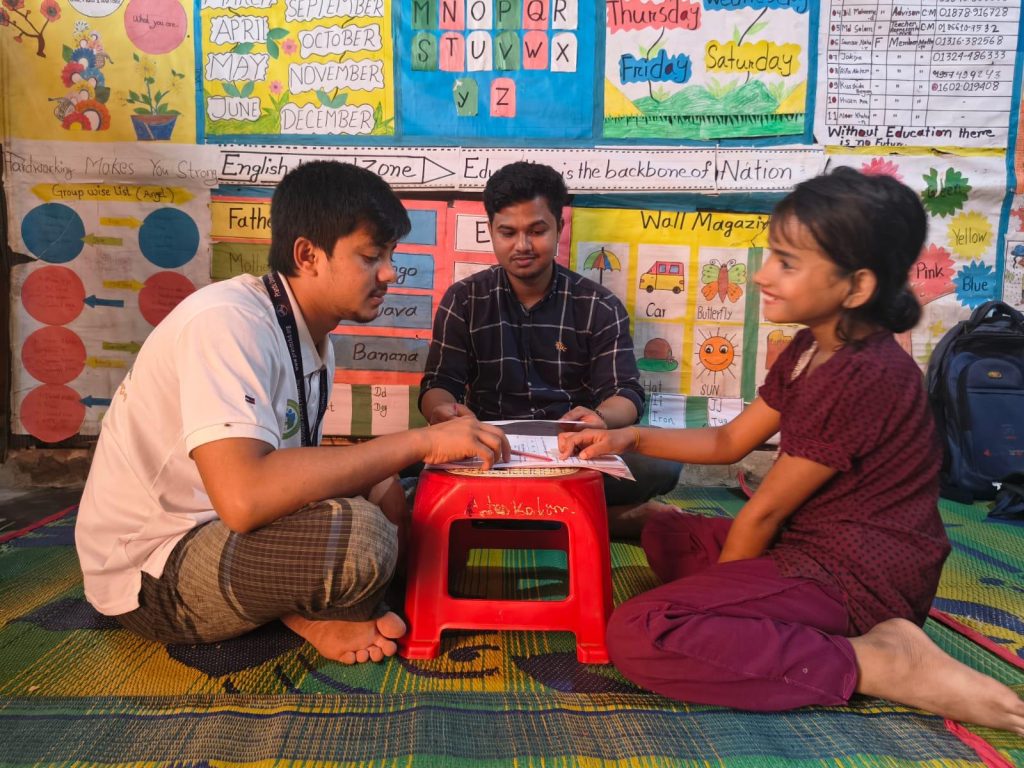
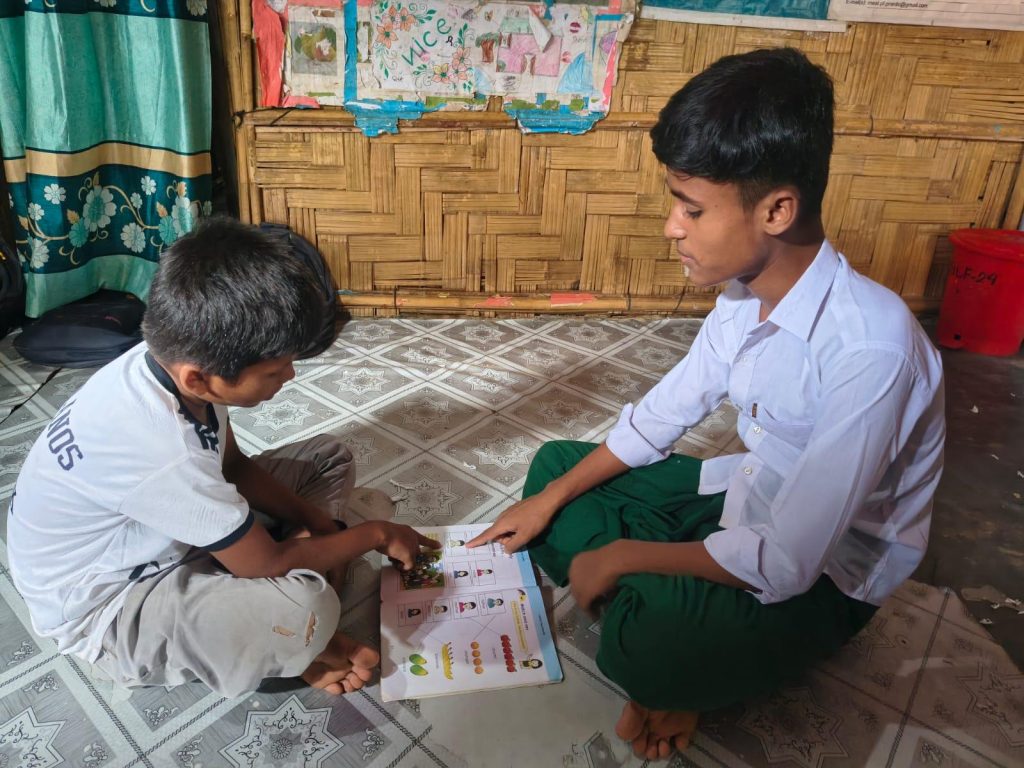
CLT Bangladesh Country Coordinator Abdul Moktader helped refugee children revive the “Each One Teach One” initiative, first introduced in the camps in 2019 but later discontinued. The approach itself had been promoted in Bangladesh in the 1980s by then-President Ziaur Rahman, who encouraged literate citizens to teach those without access to literacy as a way to combat illiteracy. Under the revived initiative, every child with basic literacy skills took responsibility for teaching at least one other child. With no classrooms nor strict schedules, learning happened in small groups and in the spaces where children already gathered.
At first, some children were unsure whether they could really teach others. But the group encouraged them. Slowly, pairs began to form. They used whatever materials they had—scraps of paper, charcoal, memory. What emerged was not just a literacy effort, but a shift in how children saw themselves. Those who had once felt left behind began to participate. Those who had learned a little discovered that they had something valuable to offer. The act of teaching reinforced their own knowledge, while also building confidence and trust within the community. Refugee parents began to notice. Some who had been sceptical started encouraging their children to join. Community leaders, too, took an interest, seeing in this initiative something that formal systems had struggled to achieve: ownership.
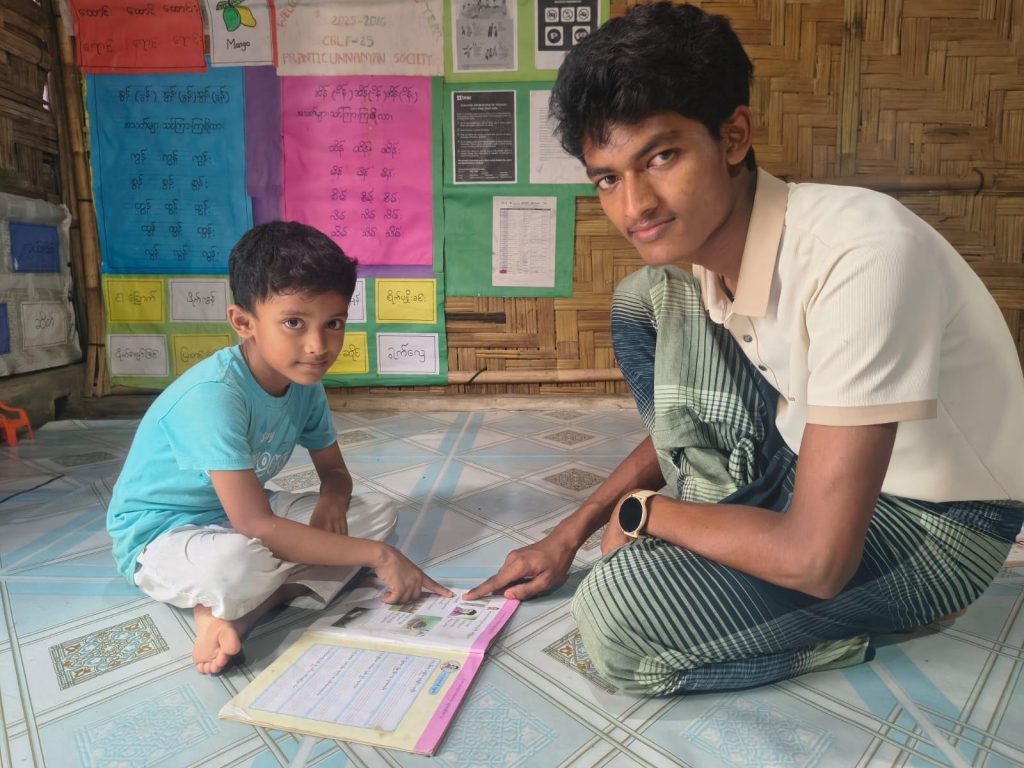
Over time, the “Each One Teach One” initiative expanded. It did not replace formal education, nor did it solve all structural barriers. But it filled a critical gap. It created a space where learning was shaped not only by institutions, but by relationships. More importantly, it reframed literacy not as a distant goal, but as a shared responsibility.
On the next International Literacy Day, the same group of children gathered again. This time, their rally carried a different message. It was no longer only about awareness. It was about what they had already begun to change. The challenges remained: limited access, constrained resources and uncertain futures. But within those constraints, these children demonstrated something often overlooked: that even in conditions of exclusion, agency can emerge. They did not wait to be included. They began, instead, to include one another.
Note: Refugee children’s names are pseudonyms used for confidentiality purposes.
By:
Mst Umme Habiba Fahmina Karim, Global Campus Asia-Pacific Regional Children’s Rights Officer, Institute of Human Rights and Peace Studies, Mahidol University, Thailand
Abdul Mamoon Moktader, Child Leadership Team Country Coordinator, Bangladesh, Global Campus of Human Rights
Riaz Udding Bappi, Child Leadership Team, Bangladesh, Global Campus of Human Rights