If human rights activists did not exist, aggressive populists would have invented them as foes. This sentence paraphrases Sartre’s statement: ‘If Jews did not exist, they would have been invented by Antisemitism’. I begin with this provocative thesis for three reasons:
- Aggressive populists have a deep and affective need for an enemy, just as Antisemitism needed Jews.
- The transformation of human rights activists’ public image can be summarised as a shift from being ‘friends’ of democracy to ‘foes’ of post-democracy and populism.
- The counter-revolution that has been unfolding for years in post-communist countries—now accelerating like a hurricane—reinforces Karl Schmitt’s model of politics as a clash between friends and enemies, establishing it as the new political normal.
From the vast arsenal of the anti-human rights counter-revolution, I will highlight just one example – both exotic and typical. It resembles the medieval debates on ‘How many devils can dance on the head of a pin?’ Behind this paradoxical formulation lie three important messages: there is a strong center of power that produces and validates public debate topics; identity politics – historically religious and now national (with a religious undertone) – is key to the public narrative; and an imaginary-symbolic entity can have very real effects by intensifying the politics of fear.
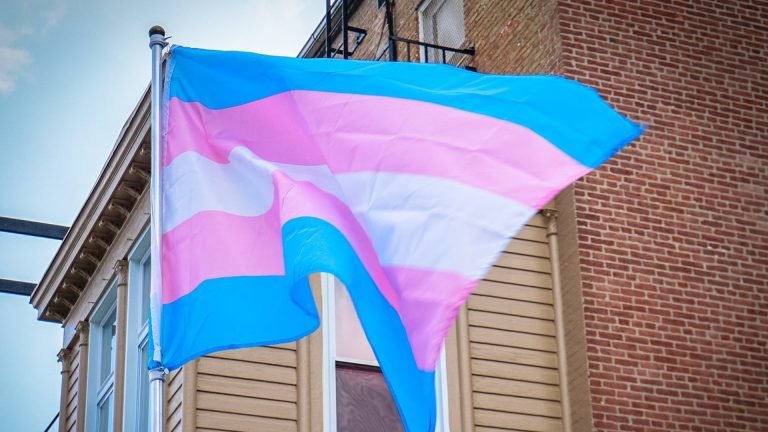
Today, anti-human rights attacks targeting ‘gender’ reproduce the same symbolic politics. ‘Gender’ is not perceived as the social construction of sex but as an imaginary yet terrifying entity, associated with the threat of inventing new genders, multiplying LGBTIQ+ identities, and disrupting traditional norms. It is constructed as an ‘empty symbol’ open to any negative content which legitimises aggressive attacks against all forms of diversity: refugees, migrants, minorities, LGBTIQ+ people, non-traditional families, etc., all under the banner of the politics of fear.
The attack on human rights activists is frontal, powerful, and effective. Three shifts amplify its impact:
- The mainstreaming of the far right.
- The decline of freedom of speech.
- The conformity of many public intellectuals who, following the winds of change, effortlessly repaint themselves from liberals to conservatives.
The weakening and marginalisation of human rights activism follow two paths:
- The intensification of aggressive attacks- both political and legal (such as foreign agent laws).
- The erosion of institutional protections through the dismantling of the rule of law by post-democracy.
Post-democracy, in the spirit of Colin Crouch, is defined as the formal existence of democratic institutions while hollowing them out, turning them into empty shells. This phenomenon is increasingly generalized in the Trump-Orbán-Bardella world.
What strategy of resilience and vitality can and should civil activism develop? I see it moving in two opposing directions – super big and super small.
‘Big is beautiful’ of the civic protests
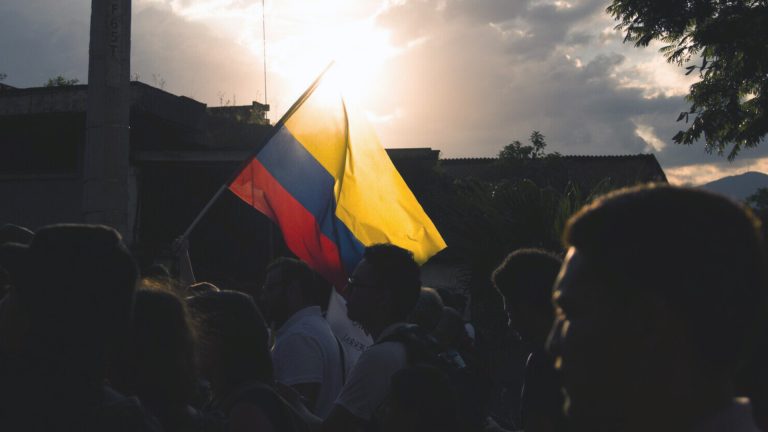
In human rights terms, ‘big is beautiful’ refers to civic protests. They mobilise immense civic energy, with crowds filling the squares demanding transformative change.
The protests in Serbia in 2025 began as a student initiative but have since grown into the country’s largest civic mobilization since the demonstrations against Milošević. Spreading from Niš to Belgrade and across 276 cities and towns, they erupted after the collapse of a roof at a newly renovated train station in Novi Sad on November 1, 2024, which killed 15 people and critically injured two. What began as outrage over the disaster quickly evolved into a broader mobilisation against corruption, the authoritarian rule of please President Vučić, and demands for accountability and democracy. These protests have now become truly historic.
In Bulgaria, 2013 was marked by a year-long wave of street protests and demonstrations in the capital, Sofia. The year 2020 also saw significant public unrest. The civic mobilisation at the end of 2025 —unprecedented in terms of both scale and geographical scope, involving not only the capital but also several large and smaller cities— led to the resignation of the government and a restructuring of the political landscape. Two types of political temporality define the protesters’ demands: immediate and strategic. The immediate protest agenda is clear and categorical: the resignation of the Prime Minister and the Prosecutor General. The rhetoric is emotionally charged, linking resignation to words like shame, tribunal, and prison. At the same time, the movement is strategically oriented toward deeper change. Young but insightful and visionary, the protesters consciously lay out a strategy for a new social contract, shaped by four key perspectives, as shown by these quotes from the present author’s interviews with protestors:
- Transformation, not just resignation. ‘Systemic change, not just replacement’ and “Governance must be radically reformed’.
- No accountability without justice and the rule of law. ‘It doesn’t matter who governs if there is no independent prosecutor’s office working for the people rather than for oligarchs and the mafia’.
- Not just a protest, but a political alternative. ‘We want the protest to result in an ALTERNATIVE’.
- The formation of contestatory citizens. ‘These protests mark the beginning of a new generation—more responsible, more vigilant, more critical’. ‘We are the alternative—voting, protesting, and fighting through all democratic means’.
Even if the protests in the Bulgarian case do not fully achieve their objectives, they consolidate the civic ethos of contestation and longing for democracy.
Protests are the ‘super big’ of activism – not only because they mobilise an impressive number of citizens, but also large circles of public opinion support them.
‘Small is beautiful’ of the volunteer as the empowered and empowering agency of civic activism
‘I feel that I can change the world’, a volunteer once said to the present author. Such confidence may seem paradoxical – how can volunteering with migrant children, who are rendered invisible in public space by hegemonic securitarian and anti-refugee discourses, change society, politics, or the world? Yet, this sentiment powerfully captures the emergence of a new type of citizenship and its transformative potential.
Volunteers are everywhere:
- A young environmentalist, after receiving a top-tier education abroad, returns to her home country and, alongside her professional career, starts working with Roma children.
- An avid mountaineer inspires other volunteers to help people with disabilities experience the beauty of the mountains.
- Students and professors engage with refugee children through participatory culture and eco-practices.
Volunteers embody the ‘small is beautiful’ ethos in human rights terms. They may be small and invisible, yet their impact is profound in three keyways:
- They enhance a solidarity-based citizenship – one that sees the Other (minorities, vulnerable groups, migrants, etc.) as ‘friends’ rather than ‘foes’.
- They cultivate a politics of courage, standing in direct opposition to the politics of fear.
- They drive transformation – and become transformers themselves.
For Hannah Arendt, to act means to take initiative, to begin. And every beginning is both the start of something new and the transformation of the beginner himself. Volunteers exemplify this Arendtian vision of action, in which agency, initiative, and change intertwine—shaping both the world and the active self.
Creating the new generations of human rights activists
‘We are intellectuals who want to change the world’, wrote Schhrbanen and Cherby, in 2006. This is the credo of the present author, as well as of the communities to which I belong, create, and strengthen. I will illustrate this with just two examples.
I am among the founders of the only academic seminar on human rights in Bulgaria, which takes place at New Bulgarian University and celebrates its 10th anniversary. We organised a major conference and published the book titled Human Rights in an Era of Crises in 2024. This interdisciplinary volume explores the issue through four thematic circles. The first examines the transformation of human rights from ‘friends’ of democracy to ‘foes’ of securitization and post-democracy. The second circle analyses democracy and human rights in times of crisis, war, and terrorism. The third addresses the challenges of discrimination and dehumanization, focusing on emblematic cases such as immigrants, refugees, and Jews. The final section investigates various rights, including children’s rights, environmental rights, housing rights, and social rights. A collective book, a conference, regular seminars, and a human rights course for students from various disciplines—all these activities shape new generations that are informed and sensitive to human rights while developing and strengthening academic research.
The European Regional Master’s Programme in Democracy and Human Rights in South East Europe (ERMA), as part of the Global Campus of Human Rights (GCHR), is also an inspiring example. I am truly proud to be among its founders, a member of the Board, and a professor teaching within it. It is a laboratory for experts and activists shaping the future of human rights through education and participatory research, as seen in the GCHR project and the 2017 publication titled Securitization and its Impact on Human Rights and Human Security.
These new generations of students, intellectuals, and activists have clearly recognised the immense challenges facing democracy, freedoms, and rights in the era of Trump, Musk, Orbán, and Vučić. However, they are determined to stand their ground and are motivated to change the world.