
The day I was accepted into ERMA was also the day I received an important job offer. I had 24 hours to choose. I followed my instincts and chose ERMA, a decision I have not regretted for a single day. ERMA taught me to think critically, see things from different perspectives, and gave me the tools to build my career. It was a privilege to celebrate ERMA’s 25th anniversary with colleagues and alumni from across the years.
Benedetta Merlino, ERMA alumna, cohort 2021/2022
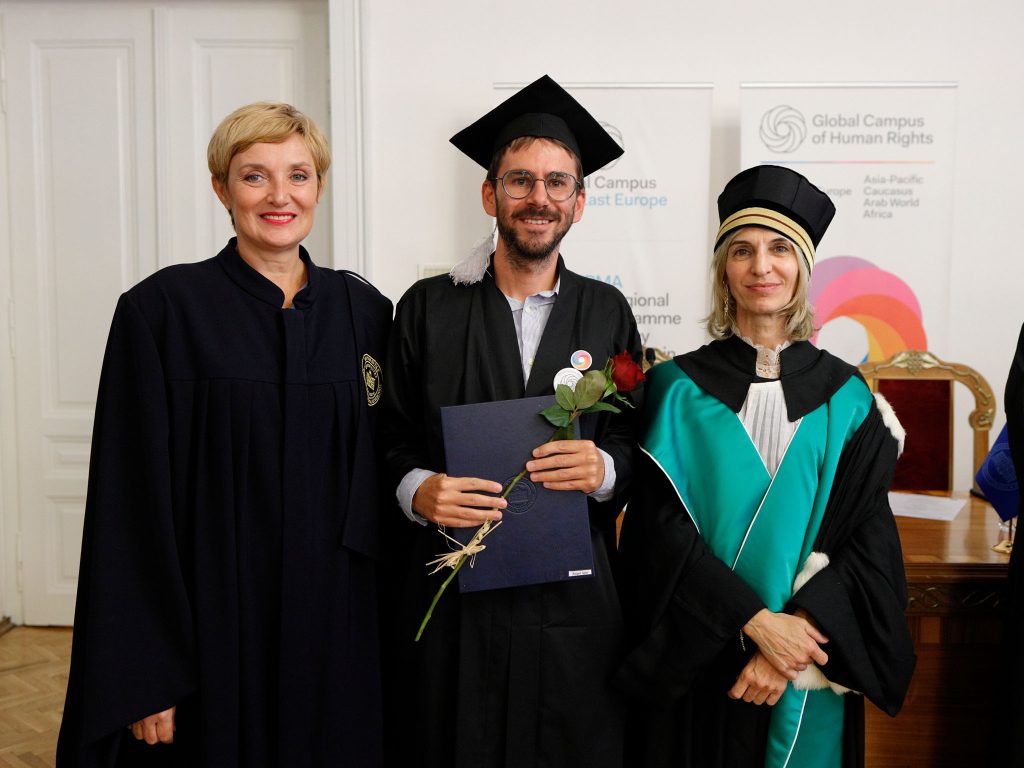
Twenty-six students received their certificates this year, joining a community that, since ERMA‘s inception in 2000, now numbers more than 700 alumni from South East Europe, the European Union and beyond. Each leaves with a double degree from the University of Sarajevo and the University of Bologna, and a place in the Global Campus Alumni network.
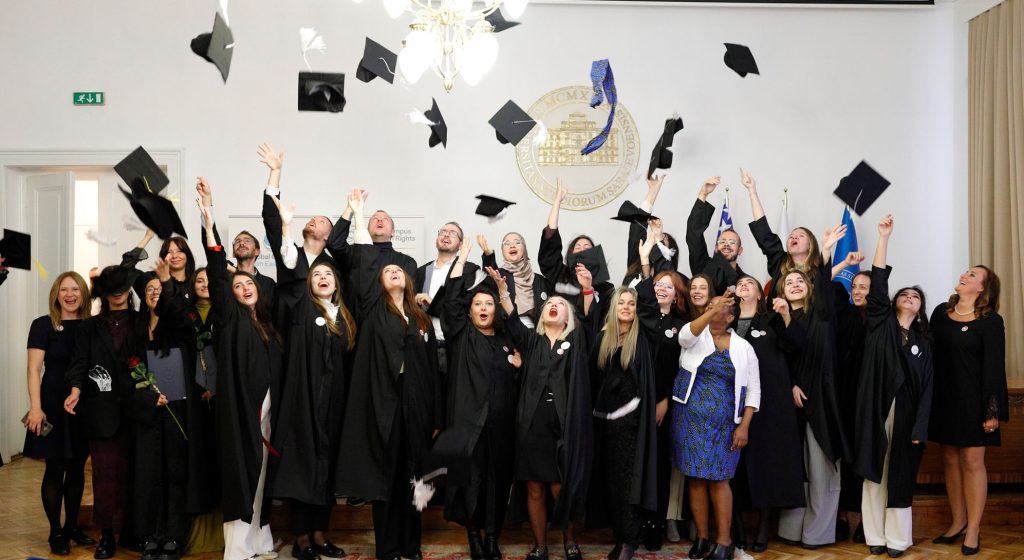
Sarajevo provided more than a backdrop to the day’s reflections. Speakers returned to the city as a living reminder of why human rights education matters, and to the value of academic cooperation at a time of resurgent ultranationalism, war and division. In an era shaped equally by global challenges such as climate change and artificial intelligence, several speakers argued, collaboration across borders and between universities is not a luxury but a necessity. The partnership between the University of Sarajevo and the University of Bologna is proof of what such a long-term cooperation can build.
ERMA had a huge impact on my life. Studying in Sarajevo helped me realise how much communities can contribute to change and how solidarity between activists can lay a crucial foundation for it. Coming together to celebrate our programme’s 25th anniversary was a very special occasion for us. It was so lovely to hug everyone again and catch up with fellow students and alumni, from the generation before ours to the newest cohort.
Iris Knežević, ERMA alumna, cohort 2022/2023
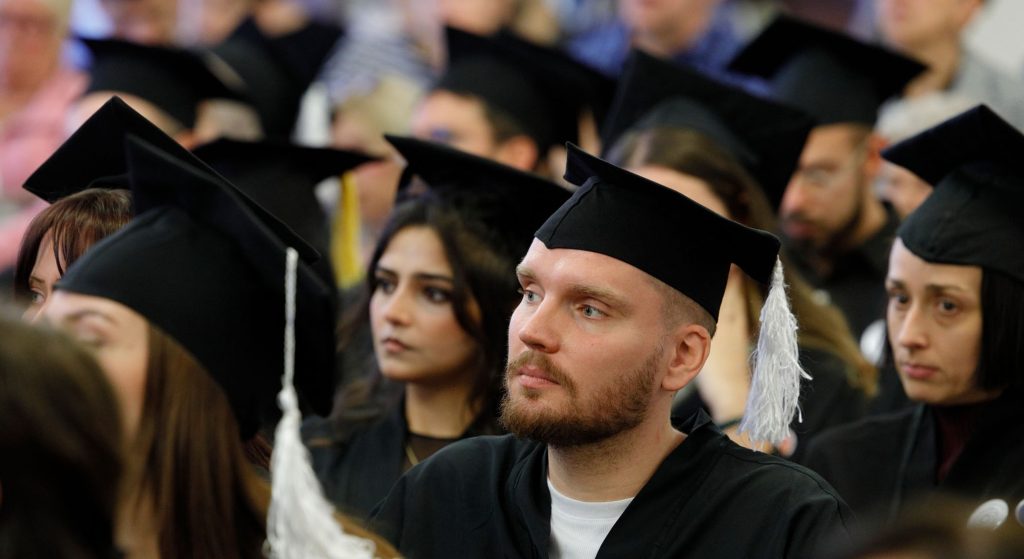
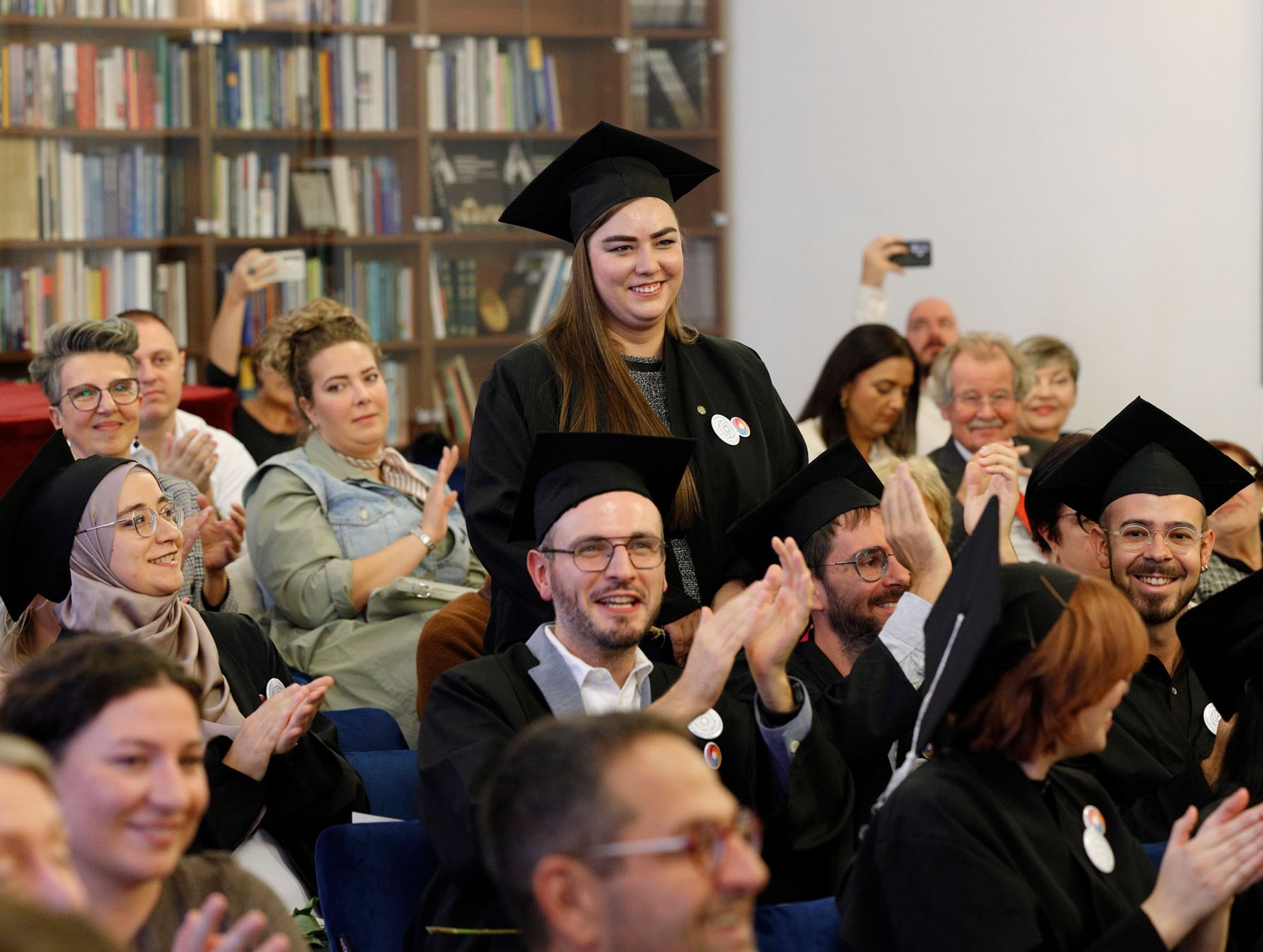
It was the graduates themselves who gave the ceremony its centre of gravity. Cohort representatives Maja Alyce Jovanović and Maida Zagorac reflected on what ERMA had given them: not only an intensive academic year, but a way of seeing. They spoke of the responsibility to speak up freely, to refuse to normalise what should never become normal, and to hold fast to truth, accountability and courage. Caring for others, they suggested, sometimes means declining to accept what a society has quietly agreed to accept.
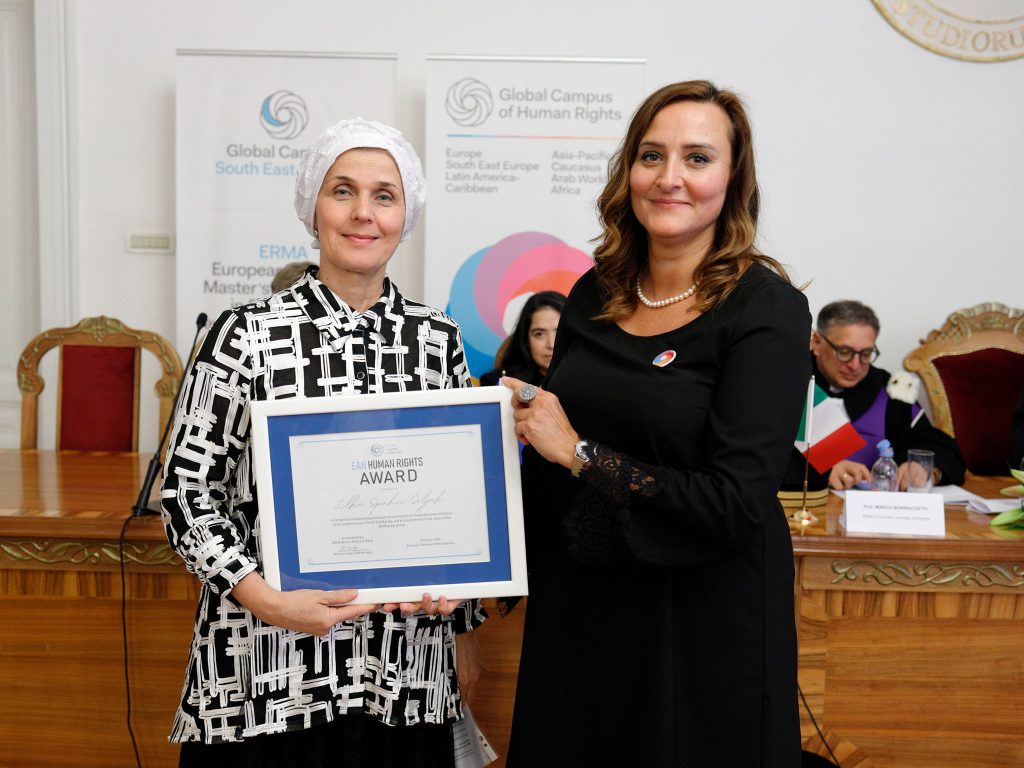
That spirit was echoed by Dr Zilka Spahić Šiljak, director of the University Gender Resource Centre at University of Sarajevo and of Transcultural Psychosocial Educational Foundation Sarajevo, first recipient of the ERMA Alumni Network (EAN) Human Rights Award, whose address drew on a career spent challenging the status quo. She encouraged graduates to question common explanations, to create space for others, and to lead change rather than wait for a moment that may never arrive. Institutions, she cautioned, rarely want change; they speak instead of strategies, and of waiting for a “right moment” that may never actually come. And through it all, she urged human rights defenders to keep their humour, their joy and their capacity for laughter.
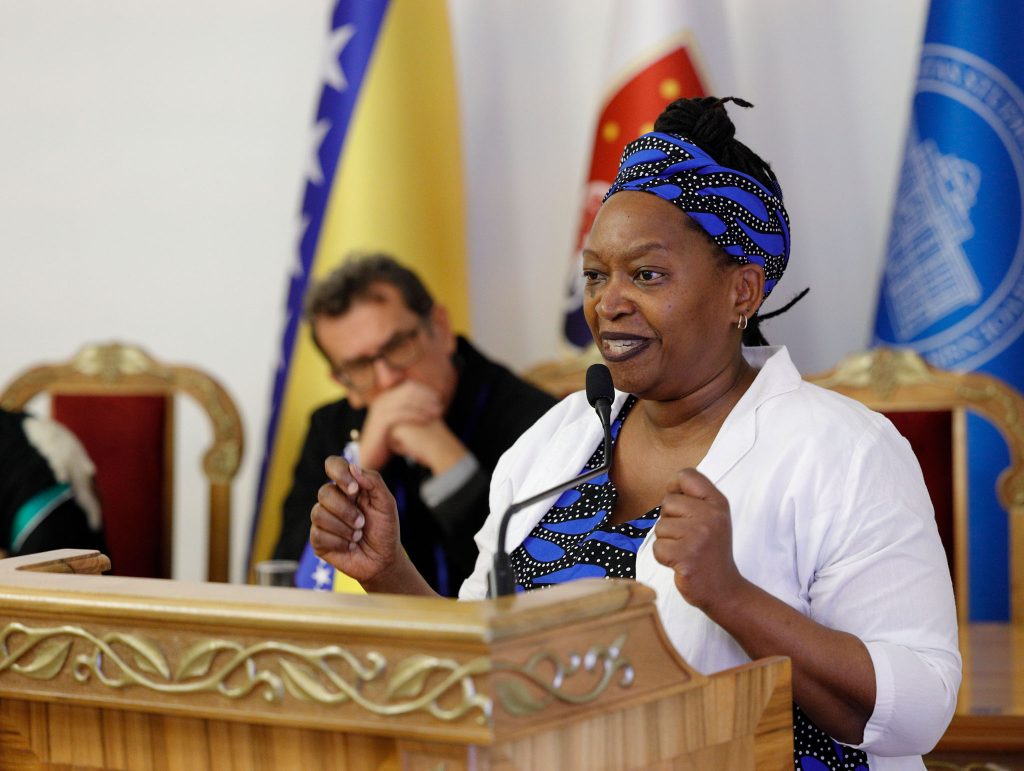
Dr Stella Nyanzi, one of Africa’s most prominent gender rights activists, and Veronica Gomez, President of the Global Campus and Judge of the Inter-American Court of Human Rights, also addressed the gathering, alongside ERMA Co- directors Prof. Asim Mujkić (University of Sarajevo) and Prof. Marco Borraccetti (University of Bologna). Across the speeches ran a common thread: the courage it takes to speak up, the difficulty of human rights advocacy, and the enduring importance of the mission that unites the ERMA community.
The ceremony closed with recognition of academic excellence. Igor Stipić was awarded the sponsored Global Internship (for top recent graduates from the Global Campus’ regional programmes), while Armela Mehdin was awarded the ERMA Climate internship. Amila Husić’s thesis will be published in the Global Campus repository, and four theses, by Igor Stipić, Nina Galvani, Lejla Alihodžić and Armela Mehdin, were selected for the ERMA Best Theses booklet.
ERMA was much more than a master’s programme for me, it connected me with inspiring people and opened the door to numerous collaborations, projects, publications, workshops and research opportunities. I see ERMA not simply as a degree, but as an experience that shaped both my professional path and many of the values and interests that continue to guide my life today. I am truly grateful to have been part of the ERMA community and for everything it has brought into my life.
Maja Šenk, ERMA alumna, cohort 2021/2022
Twenty-five years on from its first cohort, ERMA remains a unique initiative between universities across South East Europe supported by the European Union. As the class of 2025/2026 joins the Global Campus alumni network, the anniversary feels less like a looking-back than a passing-on: a quarter-century of graduates who continue to carry the work forward, in the region and far beyond it.
“ERMA contributed to my critical thinking skills, especially as a 22-year old at the time. It made me question certain social constructs and narratives, and their political roots. It also taught me how law, politics, and the media project realities that we live in. In that way it taught me a lot about my identity as a person, and helped me grow both personally and professionally.”
Zlatan Hajlovac, ERMA generation 2012/2013