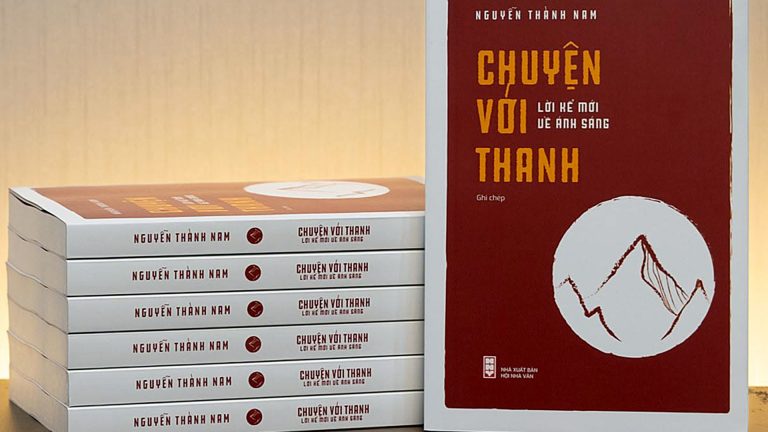
On 7 July 2026, the Vietnamese National Television (VTV) broadcast a video of Dr. Nguyễn Thành Nam confessing his crime for having distorted history when writing a book titled Chuyện với Thanh – Lời kể mới về ánh sáng (Stories with Thanh – A New Account of Light) about Ho Chi Minh, the founding father of the Communist Party of Vietnam. The book sought to explore the early life and travels of Nguyễn Tất Thành (later President Ho Chi Minh) as he journeyed abroad in search of national liberation. However, the Party drew back with a swift and severe legal response. Authorities invoked article 117 of the 2015 Penal Code—a legal provision criminalizing ’making, storing, or spreading information or items aimed at opposing the Socialist Republic of Vietnam’ on Dr. Nam. His co-defendant, Trần Việt Anh, is the founder of Spiderum, a prominent online platform for young Vietnamese intellectuals.
According to official reporting from Tuoi Tre News and Tiền Phong, the police claimed the Stories with Thanh manuscript ‘distorts historical facts of the revolution, party guidelines, and insults President Ho Chi Minh and other senior leaders’. Under pressure from state security, the book was recalled, and the author was required to broadcast an apology on national television before being taken into custody.
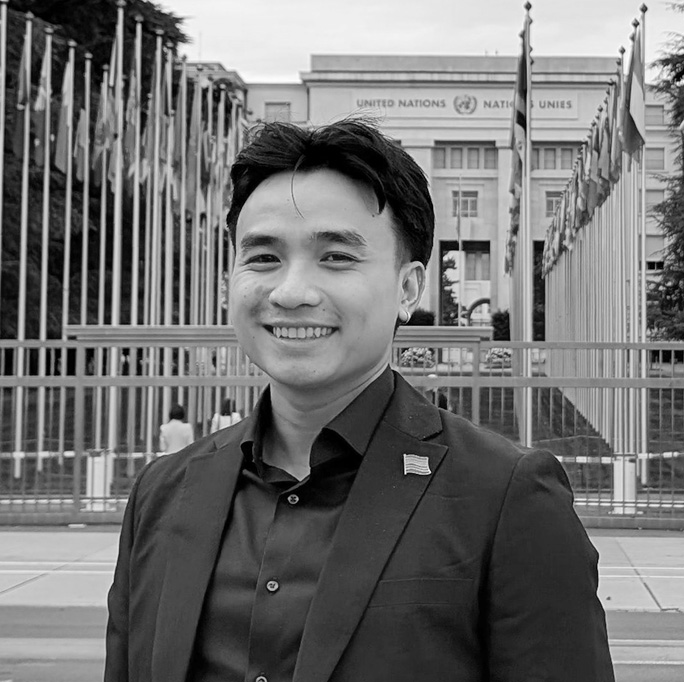
To understand the severity of this case, one must examine the figures involved. Dr. Nguyễn Thành Nam is not a political dissident, but a famous patriotic successful businessman and academist. Dr. Nam, 65 years old, graduated with a mathematical doctorate from Lomonosov Moscow State University, former Soviet Union in 1988. He was a former CEO of FPT Group, and founder of FPT University and FUNiX Online University. FPT Corporation is Vietnam’s largest information technology service company. Before he got arrested, Dr. Nam also taught the subject of Ho Chi Minh’s Thought at the Institute of Liberal Arts and Education in VinUniversity, which was created by Pham Nhat Vuong, a richest man in Vietnam. The main publisher newspaper of the Communist Party, People News, went so far as to call Dr. Nam, a ’propagator of Ho Chi Minh’s ideology’.
What is the book ‘Stories with Thanh’?
The idea for this book arose in the early 2000s when Dr. Nam went to the United States and came across the biography Ho Chi Minh: A Life by the historian William Duiker (which has not yet been published in Vietnam because certain details are considered ‘inaccurate’ according to Hanoi’s official account of Ho Chi Minh’s life), and alongside with his teaching experiences. Dr.Nam wants to give students a broader way to see history and to debate about history, not just learning everything by heart, that way, the historical data can be more accessible to younger audiences through dialogue and critical thinking.
The Writers’ Association Publishing House (Nhà xuất bản Hội Nhà văn) stated on its official website on March 19:
At the same time, the author also emphasizes an important point: President Ho Chi Minh, despite his extraordinary achievements, was first and foremost a human being. And that is why his experiences, choices, and reflections can become lessons for future generations.
’Stories with Thanh’ is written like a conversational dialogue between a lecturer and a student named Thanh, who is a Gen Z. To make the student understand what Ho Chi Minh has been through, the lecture tried to use normal language that young people use on the internet.
However, even with a good intention, Dr. Nam has been accused of using colloquial, flippant language and social media slang when discussing historical figures and events. The Public Security National Television have deemed this approach a distortion of history that diminishes the stature of leaders and exceeds the bounds of standard academic freedom. In specific terms, Dr. Nam used the word ‘backpacking/road-tripping’ (phượt) to describe when Ho Chi Minh went abroad, and ’seizing state power’ (cướp chính quyền) when talking about the revolution, while using the English word ’job’ to describe the work of Ho Chi Minh; also in many pages, the author only mentioned ’Ho’ but not the full name ‘Ho Chi Minh’. Critics said this book is a disrespectful national hero and sparked mixed reactions among the public. The false information in the book has adversely affected the reputation of the People’s administration and many other Party and state leaders.
After the arrest, Dr. Nguyen Thanh Nam’voluntarily’ admitted that many contents in the book were untrue, expressed remorse, and apologised to readers on the national television. Another defendant, Tran Viet Anh, also stated that the purpose of creating the content was to attract viewers, increase interaction, and maximize economic benefits on digital platforms.
In mid-June 2026, the Vietnam Writers’ Association Publishing House was fined 100 million VND, had its operations suspended for two months, and was ordered to destroy the entire stock of books. Dozens of media outlets that had previously published articles praising the book were also penalised.
The Hanoi Police Security Investigation Agency quickly extended to the publishing apparatus. Police authorities arrested senior leadership at the Writers’ Association Publishing House, including Director Nguyễn Thúy Hằng, Editor-in-Chief Đào Bá Đoàn, and Editorial Board Head Nguyễn Văn Yên, also under article 117 of the Penal Code. Investigators determined that the author, Dr. Nam, had paid the publishing house 1 billion VND to print and distribute the book; this sum covered costs for after-hours editing, printing, and the book launch event. Thus, with only one book, at least five people with academic backgrounds were arrested for anti-state propaganda.
Academic freedom or history distortion
Ho Chi Minh has always been a sensitive topic. Fictional and non-fictional books, as well as public discourse about the founder of the Vietnamese Communist Party, are often tightly controlled by the Vietnamese government, which emphasises absolute loyalty to his image as a patriotic, self-sacrificing communist. Critical opinions about his life, career, ideology, or any negative information about him are not allowed to be widely shared. The education and propaganda that deified him also created a general perception among the people that he was an absolutely perfect figure, without any worldly flaws. Any negative opinion about him was considered ‘disrespectful’ or ‘blasphemous’.
Historiographical revisionism, re-examining historical figures, questioning state narratives, and offering new analytical frameworks is considered a standard scholarly practice. In Vietnam, however, the ruling Communist Party of Vietnam (CPV) views its official historical narrative as synonymous with its political legitimacy. By framing historical nuances as ‘distortions’ and theoretical debates as ‘anti-state propaganda’, the government systematically blurs the boundary between academic inquiry and national security threats.
From a legal standpoint, the public security charged this case but did not provide any evidence of tangible harm, such as actually inciting violence, endangering public safety, or causing direct physical damage to state infrastructure. There was no witness or affected person indicating that their rights have been violated by this book. In this regard, the question about how the government can still arrest Dr. Nam, despite the absence of immediate consequences or specific material damage to any individual, can be answered by referring to the constituent elements of the offense under article 117 of the Vietnamese Penal Code and the objective legal assessment of the prosecutor.
In particular, under Vietnamese law, the article 117-based offense is classified as a crime defined by the ’formal composition’ (cấu thành hình thức). This means that the legal elements of the crime are established solely based on the objective act, such as writing, printing, or disseminating infringing content, and the subjective intent, specifically the aim to oppose the state or disparage the political regime. Prosecution does not require proof that the act incited riots, caused the collapse of the government, or resulted in specific victims; the mere creation and public dissemination of materials containing prohibited content are sufficient to constitute the offense.
Nonetheless, international human rights observers, including Human Rights Watch and Amnesty International, have already documented how article 117 functions as a broad, catch-all mechanism to penalise peaceful expression, critical scholarship, and independent writing.
The Public Security Television (ANTV) has also criticised the ‘Stories with Thanh’:
under the guise of ‘academic freedom’ or ‘liberal education’, much of the content in the book and these statements reflects a subjective approach, historical revisionism, and the conflation of concepts.
Another former Commander of the communist Party called this book a ‘color revolution’ infiltrating ideology education. Furthermore, state media actively has framed alternative scholarship as an unpatriotic betrayal. By branding Dr. Nam’s narrative as an insult to national heroes, the state mobilises public sentiment against intellectual exploration. This strategy forces scholars into a false dichotomy: either accept state-mandated historical orthodoxies or face public vilification and imprisonment as an enemy of the nation.
Looking ahead
The recent case about the ‘Stories with Thanh’ well illustrates the shrinking boundaries of academic freedom in Vietnam. As emphasised in detail in the author’s previous policy brief, it is important to undertake a human rights-based approach to advocate for an effective promotion and protection of academic freedom. Institutions must hold Vietnam accountable to its obligations under international human rights treaties which it signed and follow the Principles for Implementing the Right to Academic Freedom as developed by an international working group and endorsed by UN experts.