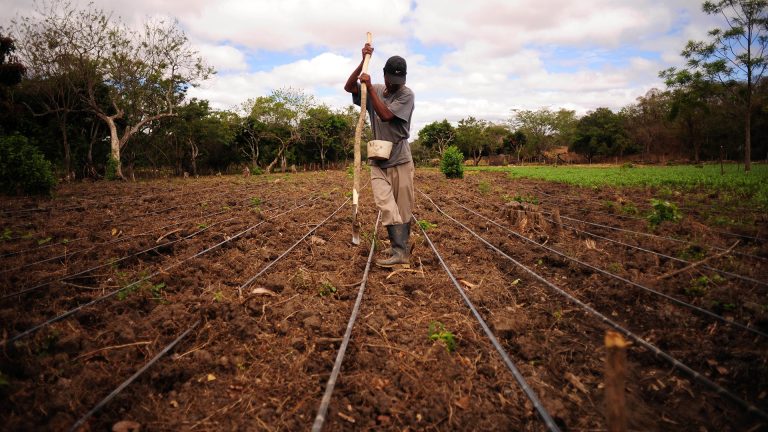
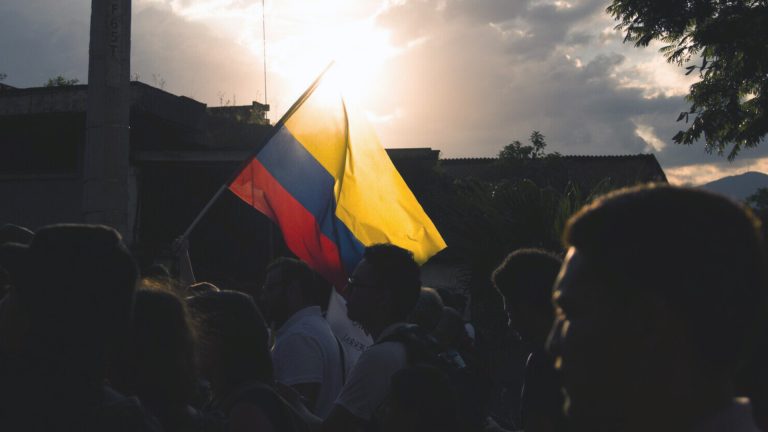
Latin America and the Caribbean is the world’s leading net food-exporting region. Yet in 2024, 33m people experienced hunger, 167m experienced food insecurity and 181m could not afford a healthy diet. This is the region’s central food-security paradox: food may be available at the national or regional level while remaining economically inaccessible to millions of households.
Wars and geopolitical shocks magnify this gap. Their consequences reach Latin America and the Caribbean through higher prices for cereals, fertilisers, fuel and transport. They enter households through the supermarket, the local market, the school meal programme and the family budget. Conflict occurring thousands of kilometres away can therefore determine whether a household in the region can continue to eat adequately.
Recent regional progress should not obscure the continuing fragility of household access to food. Hunger and food insecurity in Latin America and the Caribbean have declined for four consecutive years, but significant disparities persist across subregions and hunger remains above pre-pandemic levels. In 2023, 27.3 per cent of the region’s population lived in poverty and 10.6 per cent in extreme poverty. These figures help explain why national food production alone does not guarantee household food security.
The right to food helps us understand why this is not only a matter of markets. Food security is about dignity, equality and survival.
In the Inter-American human rights system, Article 12 of the Protocol of San Salvador recognises the right to adequate nutrition and connects its realisation with improved food production, supply and distribution, as well as international cooperation.
When global shocks reach the local tables
Food systems in the region are deeply interconnected with global markets. Although Latin America and the Caribbean is a net food-exporting region, the vast majority of its countries are net importers of cereals. Agricultural production also depends, to varying degrees, on imported fertilisers, fuel and other inputs. Farmers are therefore exposed to global input prices, while households are vulnerable to food inflation and to reductions in subsidies and social protection.
The Food and Agriculture Organisation and other United Nations agencies have repeatedly warned that hunger, food insecurity and malnutrition remain global concerns. The Global Report on Food Crises has also shown that conflict, economic shocks, climate extremes and forced displacement continue to be major drivers of acute food insecurity. These drivers often overlap. A family may face higher food prices because of war, lower income because of economic slowdown and crop loss because of drought.
These effects are not uniform across the region. In parts of Central America, the cost of fertilisers as a proportion of production costs increased by between 45 and 66 per cent from 2021 to 2022 for basic crops such as maize, beans, rice and potatoes. Small-scale farmers could respond by reducing fertiliser use, planting less or transferring part of the increase to food prices. In the Caribbean, the problem takes a different form: island economies are particularly exposed to international food, fuel and shipping costs; in 2022 half of the subregion’s population could not afford a healthy diet.
These vulnerabilities overlap with inequality. Rural communities, Indigenous peoples, women, migrants and low-income households generally have fewer resources with which to absorb price increases, crop losses or interruptions in public assistance. The fact that a country exports agricultural commodities therefore says little about whether its population can obtain sufficient, nutritious and culturally adequate food.
For this reason, food security must be understood beyond calories. It includes access to sufficient, safe, nutritious and culturally adequate food. It also includes the economic capacity to obtain food without sacrificing other basic needs.
From emergency aid to rights-based preparedness
In crises, food assistance food assistance is essential, but a rights-based approach requires governments to act before hunger becomes visible. This means protecting school meals, monitoring food prices, supporting small-scale farmers, regulating abusive market practices and ensuring that emergency measures reach those most at risk. Brazil’s National School Feeding Programme illustrates this approach: since 2026, at least 45 per cent of federal school food funds must be used to purchase directly from family farmers, with priority for Indigenous, traditional and quilombola communities, and women’s organisations.
Communities affected by food insecurity should not be treated only as beneficiaries of assistance. They should be involved in decisions about food systems, agricultural policy, land, water, school feeding, social programmes and emergency responses. This is particularly important for Indigenous and rural communities, whose relationship with food is often connected to land, territory, culture and environmental protection.
For Indigenous communities, participation is also linked to preservation and development of their own knowledge systems. Research initiatives in several Latin American countries illustrate how food system resilience can be built by combining ancestral knowledge with contemporary techniques. In the Quechua community of Cusi Cusi in Bolivia, for example, families identified access to water as their principal concern and participated in constructing rainwater storage tanks adapted to local conditions. Other initiatives have brought together young agronomy students and Indigenous knowledge custodians to develop organic fertilisers and restore overexploited soils.
Preparedness in Latin America therefore requires more than storing food. It requires institutions capable of protecting people when crises hit, social safety nets that can expand during crises, labour policies that preserve income security, support for local production and resilient agriculture, transparency in food prices and public spending, and international cooperation when shocks exceed national capacity. For Indigenous communities, it also requires respect for their knowledge systems, participation in defining priorities, and protection of their access to land, water, seeds and traditional food systems.
Human rights do not prevent war or guarantee stable global prices. They do, however, establish standards for how states must prepare for and respond to threats to food access. In a region that helps feed the world while millions of its own inhabitants cannot afford a healthy diet, export capacity cannot be the only measure of food security.
The true measure of preparedness is whether people can continue to eat adequately and with dignity when the world becomes unstable.
This week we are delighted to publish a new post by Sara Cristina Benítez-Mongelós, the blog’s regional correspondent for Latin America. You can read her previous posts here, here, here, here and here.
The GCHRP Editorial Team