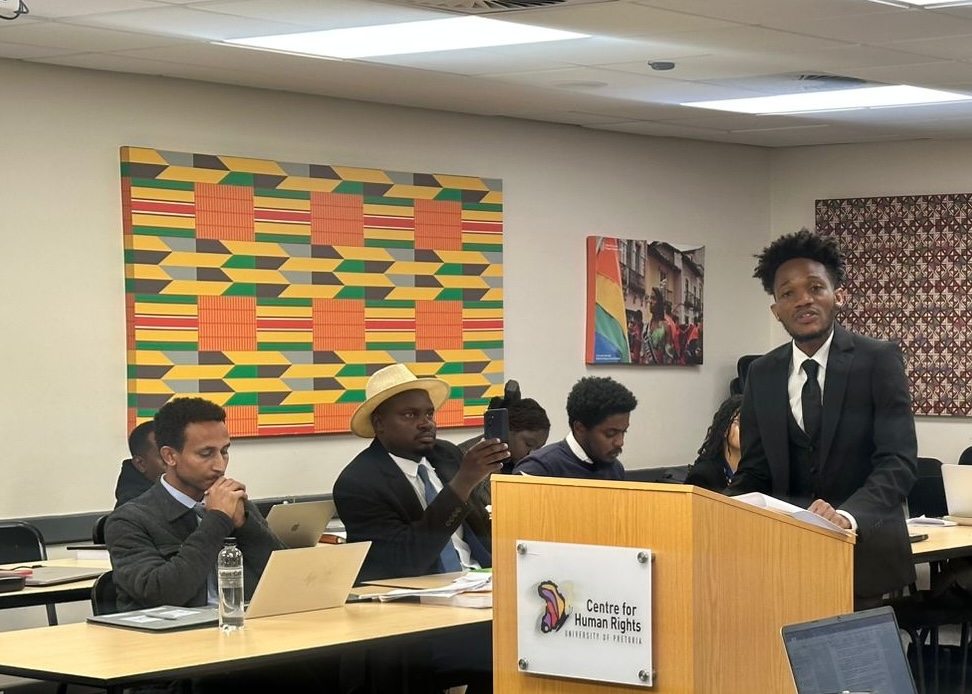
The competition forms part of Module 4 of the curriculum, which covers the history and structure of the African human rights system: the African Commission on Human and People’s Rights and its Special Procedures, state reporting, the role of NGOs and the domestic effect of the African Charter. The module also examines socio-economic rights, forced migration, the rights of marginalised groups and judicial enforcement mechanisms — including the African Court on Human and Peoples’ Rights and sub-regional bodies in ECOWAS (Economic Community of West African States ), the EAC (East Africa Community) and SADC (Southern African Development Community).
The moot court exercise has been a long-standing component of the HRDA programme, designed by the Centre for Human Rights at the University of Pretoria, which has extensive experience organising such competitions across Africa and internationally. Though hypothetical in nature, the problems are carefully crafted to mirror real legal issues arising across the continent. Students prepare written memorials and deliver oral arguments, drawing on African jurisprudence, rules of procedure and the reasoning of African jurists.
“One of the greatest highlights was engaging deeply with African jurisprudence, including the case law of the African Court and African Commission, rules of procedure, rules of interpretation, and the writings and reasoning of African jurists. The activity gave me a tangible sense of reality: how legal rules are applied in concrete disputes, how states frame their arguments, and how law, politics, state practice and compliance interact beyond the courtroom.”
Aya Adel Ghazy, HRDA student from Egypt
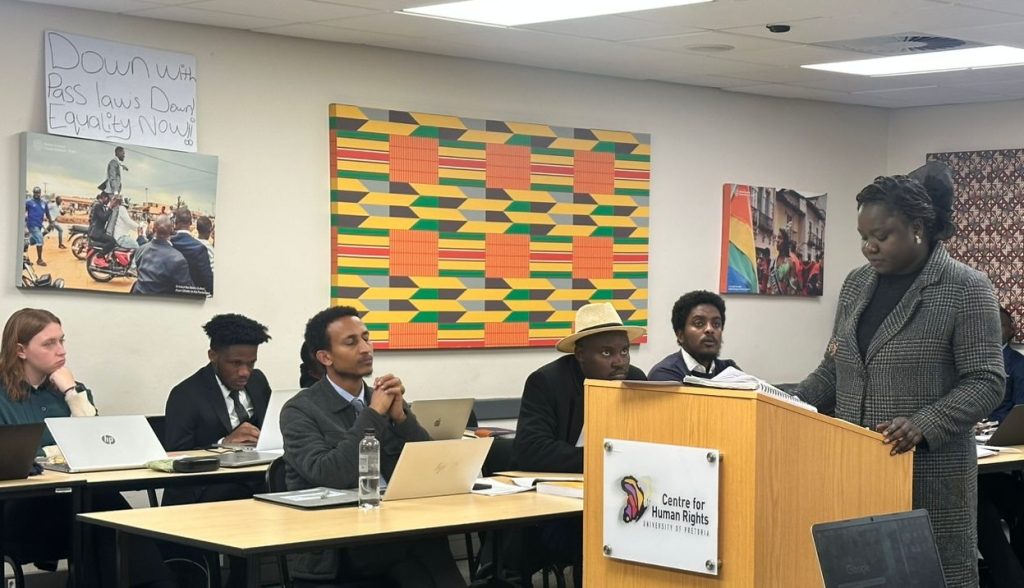
The bench in the 2026 edition included HRDA tutors and doctoral researchers, university professors, module convenor and HRDA Programme Director Prof Frans. Viljoen, Academic Coordinator Prof Magnus Killander, and Guest Judge Mr Victor Lowilla, HRDA Alumnus Senior Legal Officer at the African Court on Human and Peoples’ Rights. The exercise proved demanding. As 24-year-old student Harry Mwesigwa noted, “One highlight was the intensity of the oral rounds, as the questions from the bench required us to think quickly and critically, defend our positions with clarity, and remain composed even when challenged.”
“As with every moot court hypothetical case, ours had some facts that pointed to violations that were difficult to defend from a human rights standpoint. Arguing for the Respondent, I had to be ingenious in my use of the facts and legal authorities, and know when to make tactical concessions. This taught me that good advocacy is not about defending every position but identifying the strongest legal arguments, using the facts carefully, and responding directly to the Court’s questions.”
Harry Mwesigwa, HRDA student from Uganda
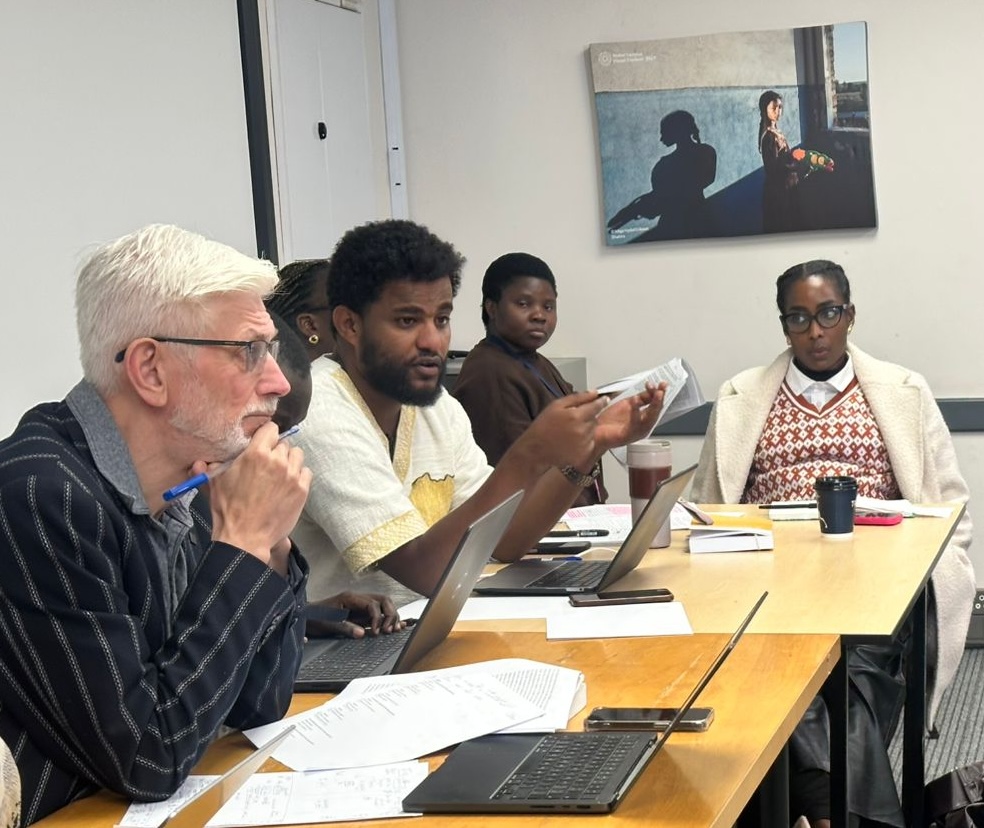
Beyond advocacy technique, the competition offered students a broader perspective on how law operates in practice.
“The activity added great value to the HRDA programme by connecting classroom learning with practical advocacy. The lectures before and after the moot, the process of drafting the memorandum, and the feedback from lecturers, colleagues and judges sharpened my legal reasoning, research, teamwork and oral advocacy skills. Being taught by scholars from across Africa and judged by some of the continent’s leading jurists was deeply inspiring and heart-warming. It strengthened my passion to continue learning and reassured me that the knowledge I am gaining can be meaningfully used in my career ahead. For that, I am utterly grateful.”
Aya Adel Ghazy, HRDA student from Egypt
In the spirit of the HRDA late founder Professor Christof Heyns‘ commitment to combining academic excellence with practical engagement in the promotion and protection of human rights in Africa, the moot court remains one of the most formative elements of the HRDA programme — a reminder that human rights law is most powerful when it moves off the page.