
Implemented between February and July 2026 through the Global Campus Alumni Cross-Regional Projects 2025-26, with support from Right Livelihood, ‘Care with Dignity: An Innovative, Rights-Based Response to Unpaid Dementia Caregivers in Nepal‘ responded to a gap Bidya has long worked to address: the invisibility of unpaid caregivers, who provide essential support to people living with dementia yet remain largely unrecognised, with limited practical support or opportunities to participate in decisions affecting their lives.
The project brought together unpaid dementia caregivers, dementia care professionals, community organisations, students and international collaborators through two Care Circle sessions and in-depth conversations with caregivers, creating safe spaces for participants to share experiences and directly shape the project’s output. The guidance of Right Livelihood Laureate Shrikrishna Upadhyay/SAPPROS-Nepal proved central to strengthening the project’s participatory vision, while regular conversations with SAPPROS’s Executive Director, Sanju Bagale, offered continued encouragement throughout its development. Fellow APMA alumnus Giwoong Son worked closely with Bidya throughout, from shaping the project concept to coordinating with the an illustrator from Korea.
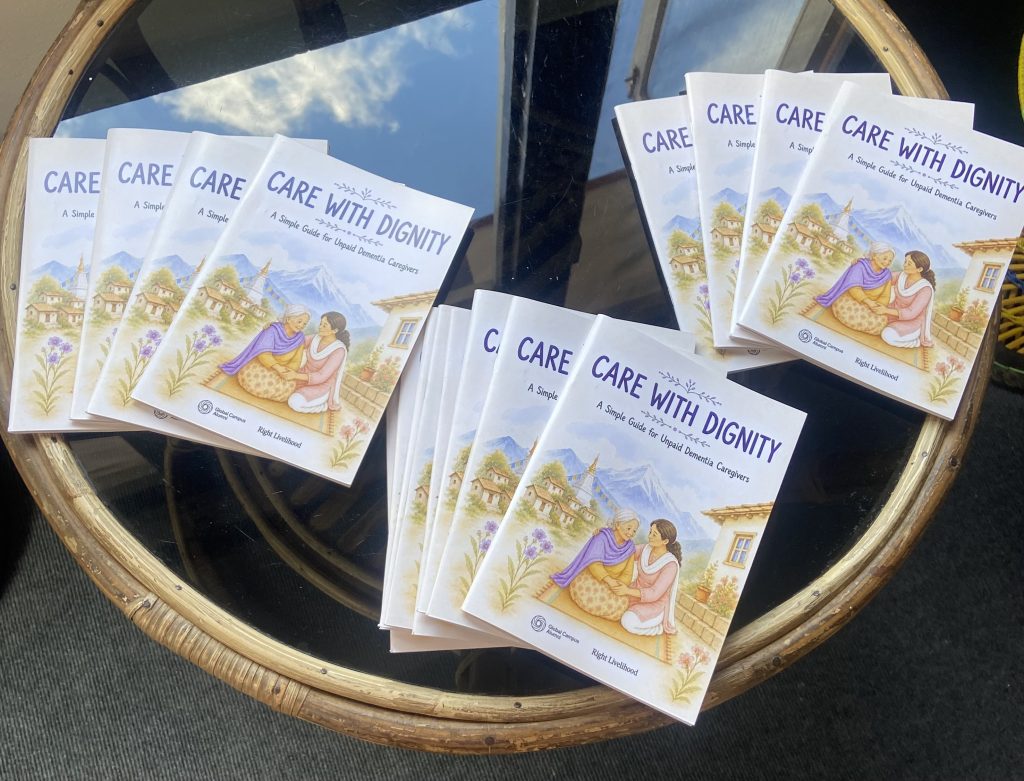
The result is an illustrated toolkit combining practical guidance on dementia care, communication and daily support with an integrated advocacy brief promoting greater recognition of unpaid caregivers within Nepal’s care economy. Reflecting on the experience, Bidya explains:
“What I enjoyed most about this project was the opportunity to transform a long-held idea into something practical and meaningful for my own community. […] This project reinforced my belief that the best resources are not developed for communities, but with communities.”
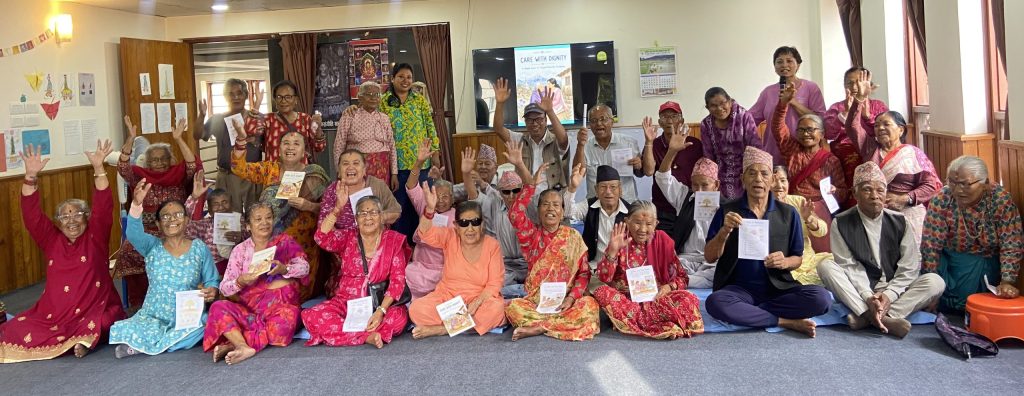
The toolkit was introduced through a community dissemination event bringing together caregivers, senior citizens, dementia care professionals and local ward government representatives, several of whom were visibly moved to see their everyday experiences reflected in a resource created with them. It is now being translated into Nepali to reach a wider audience and will be used in Care Circles, caregiver training and community awareness programmes.
For Bidya, the project marks one step in a longer-term vision: building inclusive, community-led systems that uphold dignity and human rights across the life course. She hopes to establish regular Care Circles as an ongoing support initiative, advocate for stronger recognition of unpaid caregivers—including through social protection measures such as caregiver subsidies—and pursue further research, potentially through doctoral study, to inform policy in the absence of a dedicated international convention on the rights of older persons.
📖 Access the toolkit ‘Care with Dignity: An Innovative, Rights-Based Response to Unpaid Dementia Caregivers in Nepal‘: https://doi.org/10.25330/3213
Pictured in the main photo at the top, from left to right: Shyam Bahadur Khadka (current Chairperson of SAPPROS Nepal), Bidya Maharjan, Shrikrishna Upadhyay, Sanju Bagale (current Executive Director of SAPPROS Nepal), Shyam Bahadur KC (current General Secretary of SAPPROS Nepal)
Written by Bidya Maharjan, GC Asia Pacific / APMA alumna.