Situating the crisis within Pakistan’s evolving constitutional framework, this post argues that smog constitutes a gendered human rights violation, undermining rights to life, dignity, equality, and a clean environment. It highlights persistent gaps in environmental governance and contends that Article 9-A of the Constitution offers a critical foundation for centering reproductive justice within environmental protection.
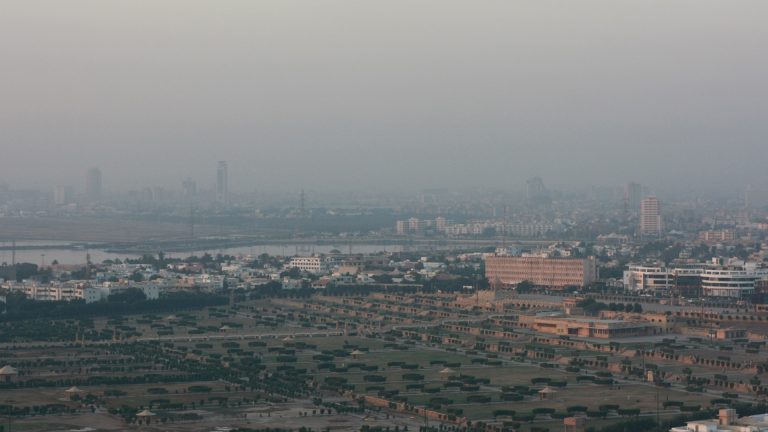
For past few winters, Lahore, the capital of province Punjab, along with other urban centres emerge as the world’s most polluted cities. The most contributing factor is played by smog. The toxic air affects everyday life, followed by an overwhelming burden imposed on the healthcare sector along with the closure of schools and traffic restrictions. Recently, the Air Quality Index (AQI) of Lahore reached a ‘very unhealthy’ level of 221 which was a depiction of how alarming the situation was. As air pollution is estimated to cause over 1250 deaths annually, the aforementioned figures further make the scenario worse. In public discourse, smog is often referred to just another environmental issue, more specifically, a by-product of rapid urbanisation. This exact portrayal conceals a very disturbing reality. For a large number of women, specifically those who are pregnant, smog is not just another seasonal issue rather a sustained violation of their fundamental rights.
Air pollution in Punjab has basically resulted from deep-rooted governance failures over time. Unbridled vehicular emissions, open agricultural burning, weak industrial regulation accompanied by lack of institutional oversight collectively contribute to the emission of toxic compounds which constitute smog. What is frequently ignored in the overall discourse is the understanding of how this environmental menace affects individuals unevenly. Pregnant women face an amalgamation of environmental exposure, biological vulnerability accompanied with social inequality, thereby making the polluted air a serious gendered human rights concern.
Impact of smog on pregnant women
Biologically, women’s lungs are 10 to 12 percent smaller than men’s and they have faster breathing rates. Ultimately, women are at a higher risk of respiratory diseases due to such biological factors. Studies suggest that after the age of 15, asthma tends to be more common in women until they reach perimenopausal stage. Prolonged exposure to smog, particularly fine particulate matter (PM2.5) poses risk of reduced ovarian reserves, various reproductive abnormalities along with certain adverse outcomes such as preterm births, neonatal mortality and cardiovascular diseases.
It is pertinent to mention that the harm of air pollution, specifically smog, is intergenerational in nature. Various studies demonstrate that multiple pollutants, when they cross the placental barrier, can lead to impaired fetal development, increased risk of preterm birth, restricted intrauterine growth and low birth weight. Exposure to toxic air has also been associated with underdeveloped lungs, compromised immune function, and long-term neurodevelopmental and respiratory complications in newborns. This intergenerational harm, which basically poses a threat at the earliest stage of life, is not merely a clinical concern. Rather, it raises quite deep human rights implications, thus endangering the right of the child to health and life, even before birth.
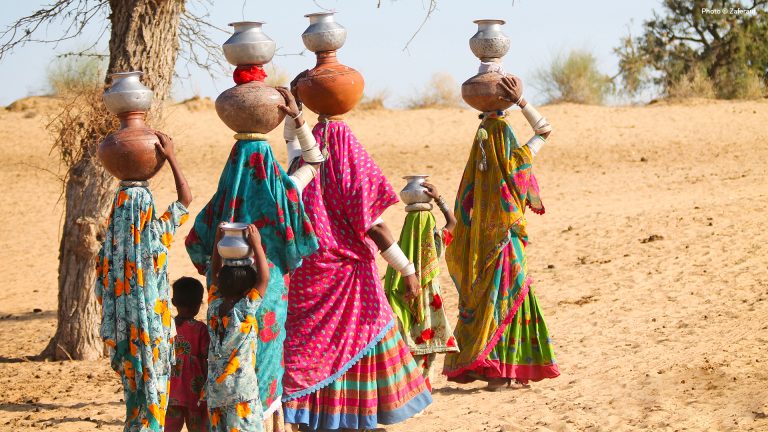
The vulnerability magnifies, especially for women from peri-urban and rural areas of Punjab, due to socioeconomic realities. During peak agricultural cycles, they have to fulfill their agricultural obligations in open fields and exposure to intense smog due to crop residue burning is quite high. Simultaneously, the excessive reliance on wood and crop waste in indoor cooking setups adds to the misery of these women, as they are exposed to hazardous smoke both outdoors and indoors. Despite the fragility of their condition accompanied with exposure to smog, access to regular medical attention is a distant dream to these pregnant women. These circumstances depict that smog actually deepens inequality among social structures. What appears as another environmental hazard actually poses a major unequal burden on that segment of the society which is the most deserving of institutional support and state patronage.
The gendered nature of air pollution harms has been authoritatively recognized at the international level. In his 2023 report, the United Nations Special Rapporteur on the right to a clean, healthy and sustainable environment underscores that ambient air pollution poses serious risks to women’s reproductive health, linking exposure to outcomes such as placental injury, preterm birth, low birth weight and stillbirth. These harms are not experienced equally: women living in poverty, engaged in informal or agricultural labour, or reliant on polluting household fuels face heightened and cumulative exposure. The report further emphasises that environmental laws and policies which appear neutral on their face often entrench discrimination by failing to account for women’s distinct biological and social realities. Accordingly, states are under a positive obligation to adopt gender-transformative environmental frameworks.
Laws which not only prevent foreseeable harm but which actively dismantle structural inequalities that magnify it are the need of the hour. Within Pakistan’s constitutional context, Article 9-A must therefore be read as requiring more than symbolic recognition; it demands proactive, gender-responsive governance that protects reproductive health, prevents intergenerational harm, and ensures that women can meaningfully enjoy the right to a clean and healthy environment on equal terms.
Clean air, dignity and jurisprudence
Over the course of time, the right to a clean and healthy living environment has been read into the Constitution through various judgments of honorable superior courts. While questioning whether the rights to life and dignity—dignity being unqualified and inalienable—can be protected if citizens did not have access to, inter alia, a clean atmosphere and a healthy environment, the landmark Shehla Zia case set the tone for mainstreaming a clean environment and healthy atmosphere as a fundamental right, given implicit recognition by reading Articles 9 and 14 of the Constitution together. In Shehri CBE v Province of Sindh and others the Sindh High Court interpreted the right to life as guaranteeing a clean and healthy environment, declaring that legislature is bound to enact laws and, furthermore, the executive is duty-bound to enforce them. The Lahore High Court in Ms. Imrana Tiwana v Province of Punjab recognised that the principle of environmental justice was inherent in the concept of clean and healthy environment and it made the state duty bound to ensure that environment was not harmful to the well-being of the citizens. It was also held that protection of the environment for present and future generations was an essential part of political and social justice, and integral to the right to life and dignity as enshrined in Article 9 and 14 of the Constitution respectively.
Recently, in the 26th Amendment to the Constitution of Pakistan, this reasoning has been given expressed constitutional mandate after the insertion of Article 9A which guarantees every person a right to a ‘clean, healthy and sustainable environment’. When Article 9A, being unqualified, is read with Article 9 and 14 of the Constitution, it elevates environmental governance from policy preference to a mandatory constitutional obligation.
From constitutional promises to lived realities
Despite constitutional foundations and judicial recognition, the lived realities of pregnant women in Punjab reveal persistent gaps between reality and promises. Environmental governance remains fragmented with no focus on gender-responsive assessments or maternal health considerations. Despite the proven record of heightened vulnerability of pregnant women from smog, they are not treated as a priority in environmental governance.
The lack of targeted protections, accompanied by healthcare exposure and exposure reduction during smog, depicts blatant institutional failure. Although Article 9A of the Constitution of Pakistan offers a strong foundation, it is high time the stakeholders need to rethink environmental governance from a human rights-based and gender-sensitive lens.
Until the time arrives when environmental policies address the lived realities of women, especially during pregnancy, clean air will remain more of a luxury, rather than an inherent fundamental right and the constitutional promises will continue to vanish amid the fine smog particles!