Global Campus of Human Rights | Education & Research

FULL MENU

Introducing Curated #3: Digital Technologies and Human Rights

Pranjali Kanel
Ravi Prakash Vyas
Thérèse Murphy
Welcome to our third Curated series, which asks ‘Is human rights prepared for digital technologies?’ The series marks our first joint venture. It has been developed as a partnership between Human Rights Preparedness and asiablogs, and will be published in parallel by both blogs.

We chose the topic of our third Curated section for a simple but compelling reason: existing and emerging digital technologies have enormous potential and profound implications for human rights. These technologies can bolster human rights; however, they can also create violations of human rights—in particular, amplifying existing inequalities and creating new ones. The COVID-19 pandemic has further advanced the need to explore the intricate relationship between human rights and digital technologies.


Overall this Curated section aims to explore whether digital technologies create or could create a ‘crisis’ or ‘emergency’ and whether human rights is prepared for such technologies. Every Monday over the coming weeks, there will be a post on some aspect of these questions. Issues covered will include algorithmic (in)justice, rights for robots, and children’s rights in the digital age. Throughout the series, the underlying question will be whether, and if so how, a rights-based approach to regulation might facilitate a transparent and accountable implementation of digital technologies.


The contributors to this Curated section include Simon Chesterman, Desara Dushi, Anusha Kharel, Wiebke Lamer, Laura Thomi and Meredith Veit, Geeta Pathak Sangroula, Puja Silwal, and Sanchit Singh, Rohini Sen, and Nimisha Srivastava. We are especially pleased to commence the series with a post that we attribute to the late Professor Christof Heyns, an internationally-respected figure in the field of human rights and new technologies and in many other human rights fields too. To produce this post, we transcribed a recording of Professor Heyns’ talk during a session on ‘Human Rights in Light of Technology: Exploring the interface and assessing the intersectionality’, delivered at the 2020 International Confluence of Academicians. The event was jointly organised by asiablogs and Kathmandu School of Law, which is a member of the 100-university Global Campus of Human Rights. Fittingly, among his many contributions to the field of human rights, Professor Heyns played a key role in establishing the Master’s in Human Rights and Democratisation in Africa, one of the Global Campus’ seven regional Master’s programmes. It is a privilege to include his words as part of this blog series.

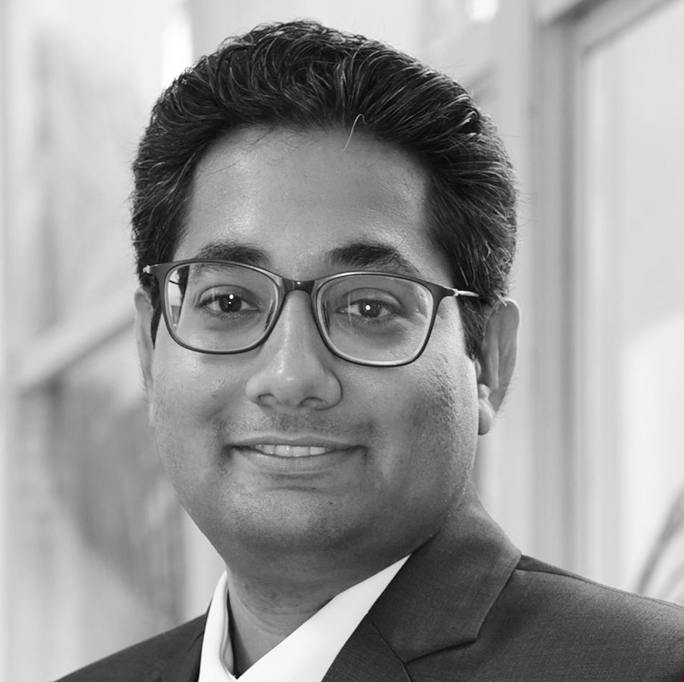


Cite as: Kanel, Pranjali; Murphy, Thérèse; Vyas, Ravi Prakash. “Introducing Curated #3: Digital Technologies and Human Rights”, GC Human Rights Preparedness, 14 March 2022, https://www.gchumanrights.org/preparedness/introducing-curated-3-digital-technologies-and-human-rights/

Pranjali Kanel

Pranjali Kanel is co-founder and managing editor of asia blogs. She is a program assistant in Global Campus Asia Pacific Master’s in Human Rights and Democratisation (APMA) at Kathmandu School of Law (KSL).

Ravi Prakash Vyas

Ravi Prakash Vyas is co-founder of asia blogs. Ravi is the member of the Global Campus Council and Programme Coordinator of the Asia Pacific Master’s in Human Rights and Democratisation (APMA) at Kathmandu School of Law (KSL). He is an assistant professor of international law and human rights at Kathmandu School of Law.

Thérèse Murphy

Thérèse Murphy is co-editor-in-chief of Human Rights Preparedness, the blog of the Global Campus of Human Rights. Thérèse is a member of the Global Campus’ governing council and chairperson of its European Master’s in Human Rights and Democratisation (EMA). She is a professor of law at Queen’s University Belfast.

Comments

Your email address will not be published. Required fields are marked *

Leave a Reply

Your email address will not be published. Required fields are marked *

This site uses Akismet to reduce spam. Learn how your comment data is processed.

Don’t Stop Here

Latest Blog Posts

submission_altafin-C8
Introducing Curated #8: Reflections on drugs and drug policy by South East Europe CLT and YAG members
Welcome to our eighth Curated Series, which provides a space to explore how some children and youth from South East Europe perceive drugs and drug policy and the significance of addressing their impact from a human rights and child rights perspective.
submission_grado-cosovic-C8
The hidden victims: children of incarcerated parents under drug laws in Croatia and Serbia
In Croatia and Serbia, drug-related incarceration silently punishes thousands of children alongside their imprisoned parents. It is worth highlighting how parental imprisonment shapes children’s mental health, economic stability, and social inclusion, comparing policy responses across both countries.
submission_Pasic-Pita-C8
The role of youth in transforming drug policy discourse in Bosnia and Herzegovina
Young people in Bosnia and Herzegovina are reshaping drug policy discourse by challenging criminalisation frameworks, promoting public health narratives, and engaging peers through activism and participatory research, serving as long-term catalysts for more humane and inclusive policy reform.