The Supreme Court’s recognition of children’s fundamental interest in accessing the internet under Article 21 read with Article 19(1)(a) of the Constitution of India is a welcome decision. At a time when several countries are introducing or considering age restrictions on social media, India top court’s approach offers an opportunity to ask a larger question: how do we protect children online without depriving them of opportunities that the internet can provide?
There is little disagreement that children need protection from cyberbullying, sexual exploitation, harmful content and platforms designed to keep users scrolling for hours. The real question is how we achieve that protection without creating new barriers to education, information and opportunity.
Countries are trying different approaches. Australia has implemented restrictions preventing children under 16 from holding accounts on many major social media platforms. France’s attempt to introduce a ban for children under 15 faced a constitutional challenge, with its Constitutional Council striking down the blanket-ban provision in August 2026. Norway has announced plans for restrictions targeting harmful social media platforms for children under 16. Meanwhile, the European Commission has proposed a graduated approach to children’s access, including restrictions for younger teenagers and a one-hour daily limit for certain restricted accounts.
These developments reflect a growing international concern about children’s digital wellbeing, as particularly shown by the United Nations Committee on the Rights of the Child General Comment No. 25 (2021) on children’s rights in relation to the digital environment. However, these developments are not evidence of a universal international agreement requiring every country to ban social media for children.
More importantly, a policy that may be feasible in a country with extensive educational resources and alternative support systems may have very different consequences in India. Children everywhere deserve protection. But protecting children does not necessarily mean adopting identical policies in societies with very different realities.
When a school has too few teachers, the internet matters even more
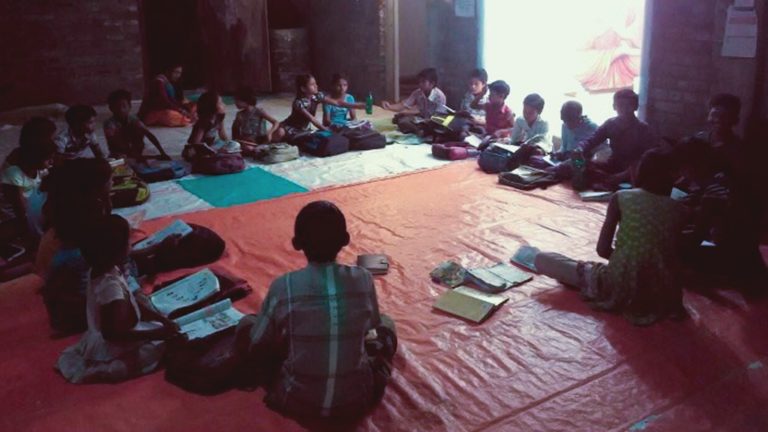
Imagine a child growing up in a remote village where the school has only one teacher responsible for several classes. There may be no library nearby, no career counsellor to explain scholarship opportunities, and no coaching centre to help prepare for competitive examinations. Even where a school exists, the quality and range of educational opportunities available to a child can vary considerably.
This is not an imaginary problem. According to the Ministry of Education’s UDISE+ 2023–24 data, India had 110,971 single-teacher schools, serving approximately four million students. Maharashtra alone had 8,196 such schools, with more than 167,000 enrolled students. UDISE+ 2024-25 data are relevant as well. These figures do not mean every one of these schools is necessarily under-resourced in every respect, but they illustrate the scale of the challenge.
The Annual Status of Education (ASER) report 2024 also found that approximately two-thirds of Std I and Std II classrooms in surveyed rural primary schools were multigrade classrooms, where children from more than one grade sit together. The report recorded improvements in school facilities, but gaps remain: only 72 percent of surveyed schools had usable girls’ toilets, while drinking water was available in 77.7 percent. These figures remind us that access to schooling does not automatically mean access to all the conditions children need to learn well.
For a child in such circumstances, the internet can offer access to recorded lessons, digital libraries, scholarship information, language-learning resources and ideas beyond the immediate surroundings. It can introduce a student to careers they have never heard of and possibilities their school may not be equipped to explain.
The internet is not a substitute for a good school or a qualified teacher. Every child deserves both. But until educational inequalities are addressed, digital access can help bridge some of the gaps. This is why we must be careful about policies that restrict children’s access to the digital world without distinguishing between the internet as a whole and the particular risks posed by social media platforms.
The Supreme Court’s approach matters
The Supreme Court’s order on October 15, 2026, as discussed in The Indian Express, brings an important constitutional perspective to this debate. It recognises children’s interest in internet access and cautions against blanket restrictions that may undermine their rights. This should not be interpreted as a demand for unrestricted access to every platform. Children need safeguards, and the national government has a legitimate role in protecting them. The important point is that the right to access information should not be casually sacrificed in the name of safety.
India’s circumstances make this distinction especially important. Where educational opportunities are unequal, access to information can be a means of expanding a child’s choices. The Supreme Court’s approach creates room for a more thoughtful policy—one that protects children while recognising the value of their access to knowledge.
Children should not use the internet exactly like adults
Recognising children’s rights does not mean treating a thirteen-year-old and a thirty-year-old as identical users. Children are still developing their ability to manage impulses and assess risks. They may be particularly vulnerable to social comparison, cyberbullying, manipulative recommendations and content designed to keep them engaged for longer than they intended.
India should therefore develop a distinct, age-appropriate digital environment for children. This could include private accounts by default, restrictions on unsolicited contact from unknown adults, stronger protections against targeted advertising, effective reporting mechanisms, and limits on features that encourage compulsive use.
We should also seriously consider reasonable time limits on recreational social media use. China offers one example of time-based regulation, although an important distinction is necessary: its widely reported one-hour restriction applies to online gaming, not to all social media. Since 2021, minors in China have generally been allowed to play online games only between 8:00pm and 9:00pm on Fridays, Saturdays, Sundays and public holidays.
India need not copy that policy exactly. Instead, it could study whether age-appropriate daily limits, night-time restrictions and controls on infinite scrolling and autoplay could help children develop healthier digital habits.
The European Commission’s proposed one-hour daily limit for certain restricted accounts belonging to children aged 13–14 is another approach worth examining. Any Indian policy should distinguish recreational scrolling from online classes, educational resources, access to public services and the ability to seek help. The objective should be to reduce harmful and excessive use, not to penalise a child for spending time learning online. Time limits alone will not prevent abuse or exploitation. But they can form part of a wider system of protection, provided their effects are properly evaluated.
Why should parents become gatekeepers?
Another concern is the burden that compulsory parental consent could place on Indian families. India is a country of enormous social, economic and educational diversity. Many parents have limited digital literacy or are unfamiliar with the privacy settings, verification systems, and safety tools used by online platforms. Some families share devices; others have limited access to reliable connectivity. Children may also be raised by grandparents, relatives, or guardians who find complicated digital procedures difficult to navigate.
If every child must obtain verified parental consent to access a service, families may have to manage additional authentication, documentation, and approval processes. Platforms, in turn, must build systems to verify consent and handle exceptions. What appears to be a simple safeguard on paper can become another administrative and technological hurdle in practice. This burden is not necessarily distributed equally. Children whose parents have limited digital skills, resources, or time may find themselves excluded, even when they want to use a platform for learning or constructive participation.
There is also a more uncomfortable reality: parental supervision is not always synonymous with child protection. A teenager living in a restrictive household may need access to information about education, discrimination, abuse, or personal identity. If a parent or guardian is the source of harm, compulsory parental consent could prevent that child from seeking information or support.
This is not an argument against parents. Parents play an important role in guiding children online. But we should not assume that every family has the same circumstances, or that parental permission automatically guarantees safety. A child-protection policy must account for the child who has supportive parents as well as the child who does not.
Hold technology companies accountable
Social media companies have enormous technical and financial resources. They design recommendation algorithms, decide what appears in users’ feeds, collect personal data, and build features intended to keep people engaged.
Yet debates about children’s safety often focus on what children should be allowed to do and what their parents should permit. This risks shifting responsibility away from the companies that create and profit from these platforms.
If a platform earns money by keeping young users engaged for longer periods, it should be required to demonstrate that its design does not expose children to unreasonable risks. If its recommendation systems amplify harmful material, those systems should be independently evaluated. If the platform fails to respond effectively to reports of exploitation or abuse, it should face meaningful penalties.
The government should require transparent safety standards, effective moderation, restrictions on manipulative design, and strong privacy protections. Platforms should not be able to escape accountability simply by requiring parents to supervise their children.
Age verification also deserves careful scrutiny. Protecting children should not become a justification for collecting excessive personal information from every internet user. The method used to establish age should be proportionate, secure, and privacy-preserving. The burden of building a safer digital environment must fall substantially on those who have the power to shape it.
India needs its own balanced approach
India does not have to choose between unrestricted social media access and a blanket ban. It can preserve children’s access to the internet while introducing age-appropriate restrictions on particular platforms and features. It can consider reasonable limits on recreational screen time, protect children during sleeping hours, restrict targeted advertising, and regulate addictive design. It can also invest in digital literacy for children, parents, and teachers, especially in rural and underserved communities.
These policies should be assessed against evidence. Do they reduce online harm? Do they improve sleep and wellbeing? Do children find ways around them? Do they create privacy risks or disproportionately exclude disadvantaged children?
India should learn from international experiments, including age restrictions and time limits, without assuming that one country’s solution will automatically work here. Different societies have different educational resources, family structures, digital capacities, and support systems. Those differences matter when deciding how a policy will affect children.
A serious child-safety policy must also acknowledge that the internet cannot compensate for missing teachers, inadequate school infrastructure, or unequal educational opportunities. Alongside digital safeguards, India must continue working towards better schools, sufficient teachers, libraries and accessible learning resources. Children should not be forced to depend on the internet because their schools are inadequate. But neither should they lose access to useful information because the state has chosen a restriction that fails to consider their circumstances.
Protect children, and preserve their opportunities
The Supreme Court’s decision gives India an opportunity to develop a child-safety framework that reflects both constitutional rights and social realities. We must protect children from harmful digital environments. However, we must also recognise that the internet can be a powerful instrument of education, opportunity and independent thought—particularly for children growing up in places where access to institutions and resources remains limited.
The way forward is not to make parents solely responsible for regulating children’s digital lives, nor to leave children at the mercy of powerful technology companies. It is to establish clear responsibilities for platforms, introduce age-appropriate safeguards, encourage healthy patterns of use, and preserve access to essential information.
India should judge its policy not by how successfully it keeps children offline, but by whether children are safer, better informed and more capable of making choices as they grow up. Children should not have to surrender their right to knowledge in order to be safe. Nor should they sacrifice their safety in order to access knowledge. The challenge before India is to protect both rights—and to ensure that the responsibility for doing so rests not only with parents and children, but also with the companies that shape their digital lives.