
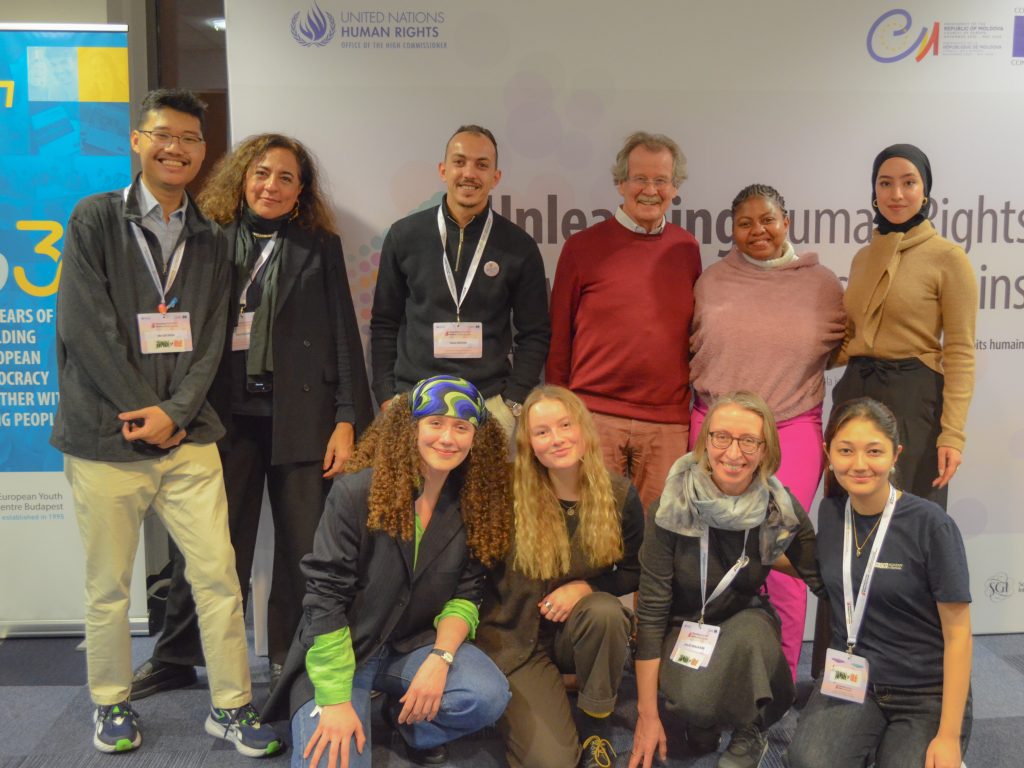
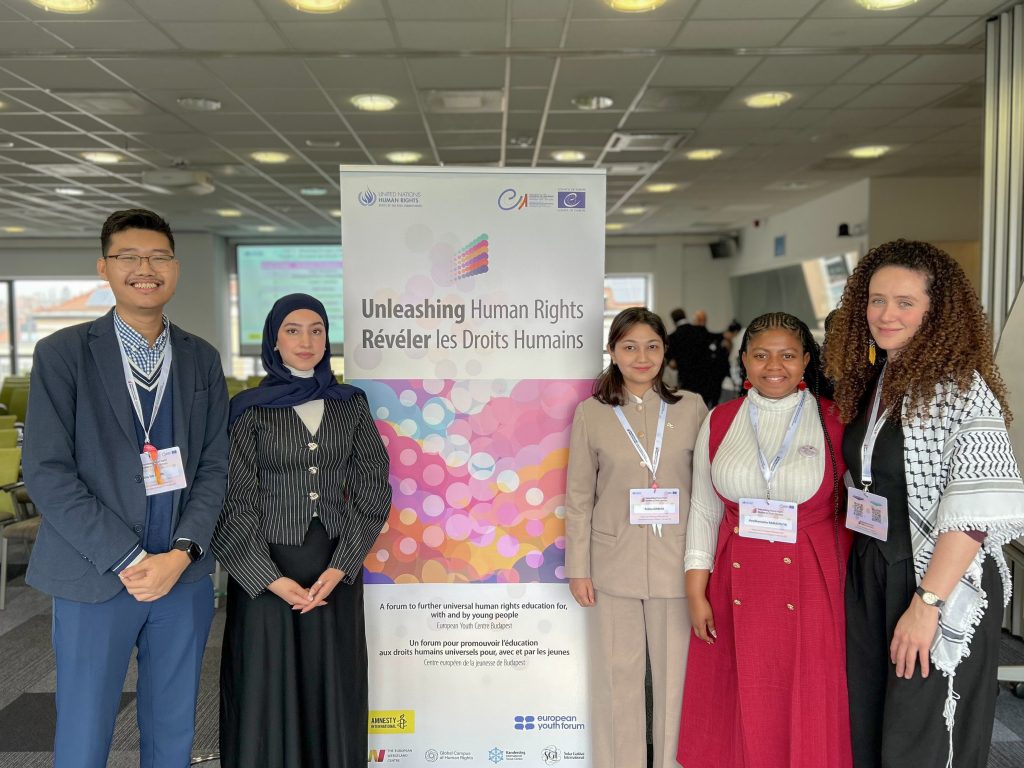
As representatives of the Global Campus, we engaged in the Forum in multiple ways: sharing our regional insights in working groups and workshops, presenting GC programmes at the Human Rights Education Fair, and participating in the multilingual reading of the Universal Declaration of Human Rights on Human Rights Day — a symbolic reminder that human rights belong to everyone, regardless of background. Being part of such a diverse delegation was both an honour and a responsibility, reinforcing the Global Campus’s long-standing commitment to human rights education as a transformative and emancipatory practice worldwide.
Human Rights Education as a Transformative Practice
Throughout the Forum, human rights education (HRE) was approached as a central and transversal element of human rights work. Discussions highlighted how HRE is inherently intersectional and responsive to diverse realities, addressing issues from decolonial climate justice to artificial intelligence. We also reflected on the power of non-formal learning: many of the most impactful exchanges happened in informal spaces, where stories of identity, struggle and belonging reminded us that HRE emerges wherever people share lived experiences and build understanding.
Facing the Rise of Authoritarianism
A recurring theme was the global rise of authoritarianism and its consequences for the future of HRE. Participants described shrinking civic spaces, restrictions on academic freedom and increasing risks for human rights defenders and educators working in fragile or repressive contexts. The Forum reinforced the need for international solidarity, transnational networks and collective strategies to protect and sustain human rights education in these environments.
Human Rights as a Pathway to Peace and Conflict Resolution
We explored how HRE can contribute to peacebuilding by strengthening dialogue, promoting mutual understanding and addressing root causes of conflict. Participants emphasised that HRE is not only theoretical but a practical and transformative tool that empowers youth and communities to engage constructively even in contexts of tension. Drawing from our own regions, we shared experiences of community-based projects, conflict resolution exercises and safe spaces for discussion, illustrating how HRE supports social cohesion, accountability and resilience.
Strengthening a Global Community
For the Global Campus alumni present in Budapest, the Forum reinforced a deep sense of belonging to a global community committed to justice, dignity, education—and to joy as a human right. Despite addressing the many crises shaping our world, moments of shared joy and connection emerged as a powerful reminder that human rights work is sustained not only by struggle, but also by hope and human connection. As we move forward, the lessons from Budapest remind us that human rights education is ultimately about people: their stories, their courage and their determination to imagine a more just world. And above all, the Forum reassured us that we are not alone in this task.
Authors: Amanda Rossini Martins, Rosita Sekandari, Sai Khun Min (Arthur), Azwikonisaho Gloria Ramavhuya, Yazan Mezher and Ahmat Yakoub
Photos by Sai Khun Min (Arthur)