
Organised within the framework of the Global Campus – Right Livelihood project Climate and Conflicts: Redress and Prevention by the Global Campus Caucasus (Centre for European Studies, Yerevan State University), in cooperation with Global Campus Central Asia and the Jean Monnet Centre of Excellence (DeHuRiS), the conference also brought together Global Campus faculty, students and alumni for a cross-regional exchange on some of the most urgent questions facing human rights today.
Among the participants was Fenot Mekonen Hailu, Deputy Director and Lead for Partnerships and External Representation at HALE-Human Rights and Inclusion Network (H-HRIN) and a Global Campus alumna from the LLM in Human Rights and Democratisation in Africa at the University of Pretoria. Her contribution focused on the place of children in climate justice debates. Her poster presentation, Children at the Frontlines of Climate Injustice in Africa: A Critical Assessment of the African Human Rights System’s Response, and examined the gaps in regional responses to the disproportionate impact of climate change on children in Africa. Presented in a diverse and expert setting, the research prompted constructive discussion and reinforced the urgency of centring children in climate justice frameworks.
Across three days, the conference addressed questions of climate justice, global inequality, environmental degradation, intergenerational justice, and the links between climate change, conflict and security. Particularly powerful moments of the conference were the video address by Mary Robinson (Ireland’s first female President and former UN High Commissioner for Human Right), who spoke about the need for global solidarity and shared responsibility; the speeches by Joan Carling (Filipino indigenous activist and Right Livelihood Laureate 2024), Ritwick Dutta, from the India-based Legal Initiative for Forest and Environment (Right Livelihood Laureate 2021), and our Secretary General Manfred Nowak, who reflected on legal accountability and global disparities; and the lecture by Fons Coomans, Professor Emeritus at Maastricht University, on intergenerational justice, which prompted deeper reflection on the rights of future generations and the long-term consequences of decisions taken today.
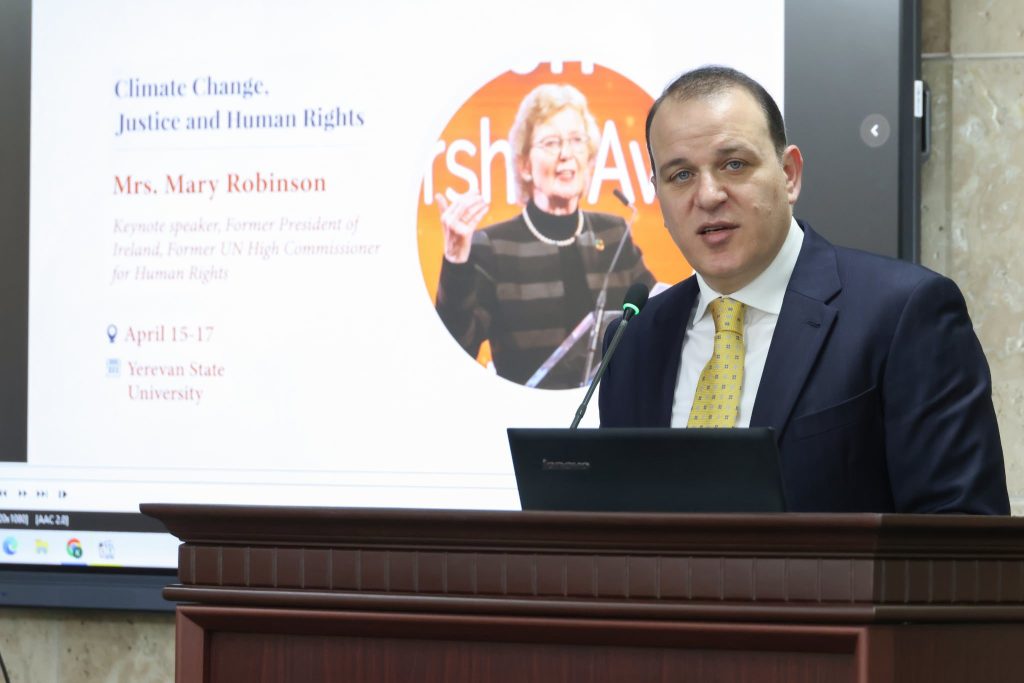
The second day stood out for its focus on the connections between climate, conflict and security, as well as environmental challenges such as water scarcity. Discussions on genuine youth participation—young people as active participants in shaping climate responses—, and the presence of young voices (the Armenian Child Leadership Team and Youth Advisory Group) throughout the conference, added a crucial dimension to these exchanges. For a researcher like Fenot working on children and climate injustice, this was one of the most significant aspects of the conference: a reminder that children must not only be protected, but heard and included in shaping responses.
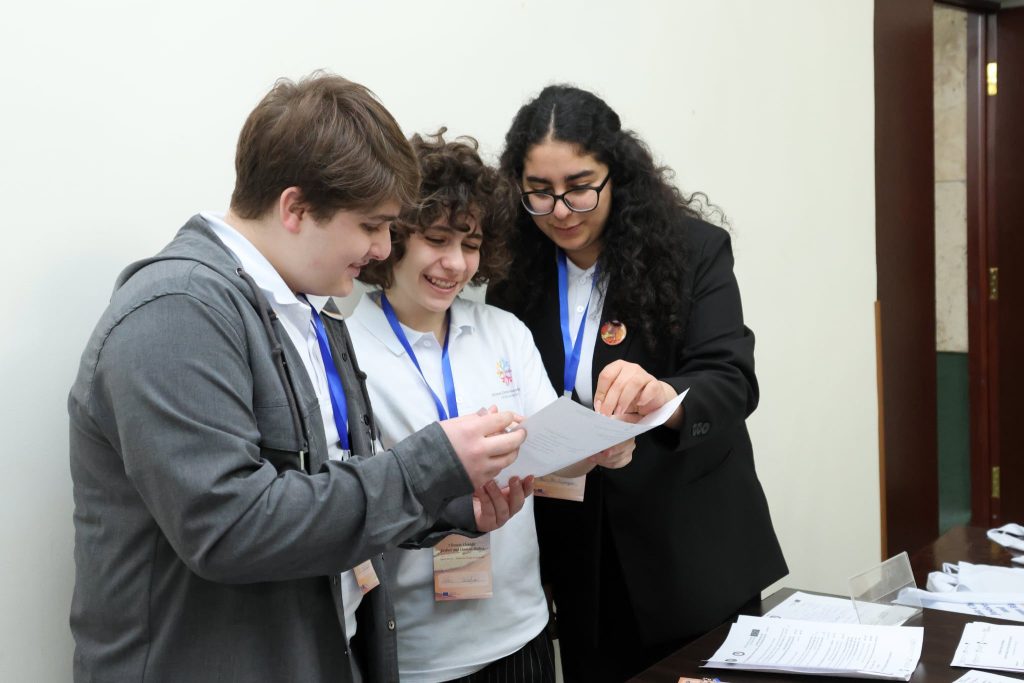
On the third day, discussions shifted towards climate activism, governance, diplomacy and resilience. These sessions offered important insight into how policy, institutions and international cooperation can work together to respond to climate challenges. Across all three days, the conference made clear how closely environmental issues and human rights are now connected, and how this is shaping new legal and accountability frameworks.
For Fenot, one of the strongest takeaways was the insistence that climate justice cannot be approached in isolation. Across panels and discussions, environmental harm emerged not only as an ecological issue, but as one deeply entangled with inequality, displacement, governance and intergenerational responsibility. The conference reinforced the need to approach climate change through human rights frameworks capable of addressing both immediate harms and long-term structural injustice.
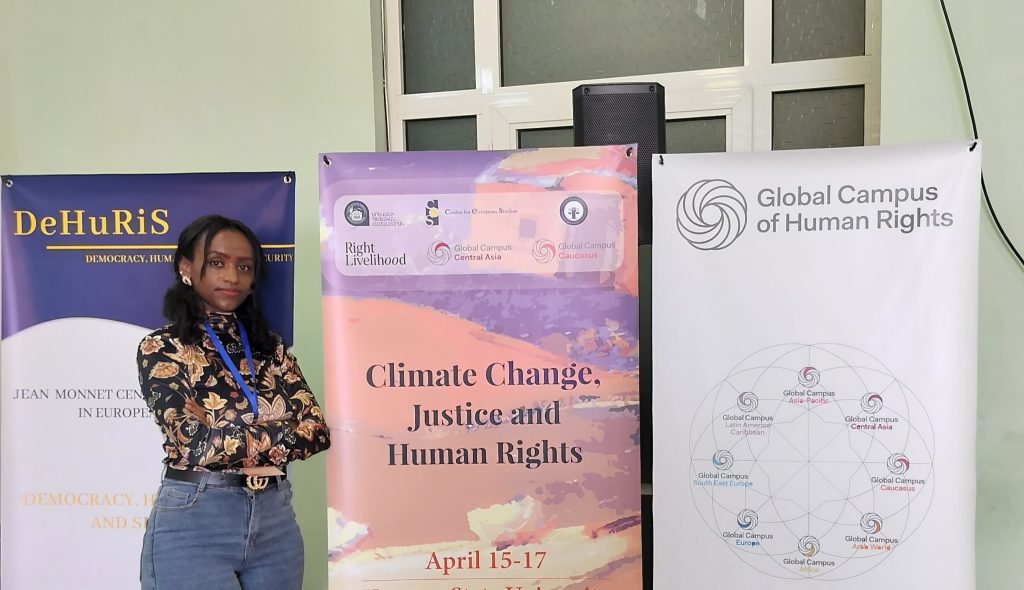
Written by Fenot Mekonen Hailu, HRDA Alumna