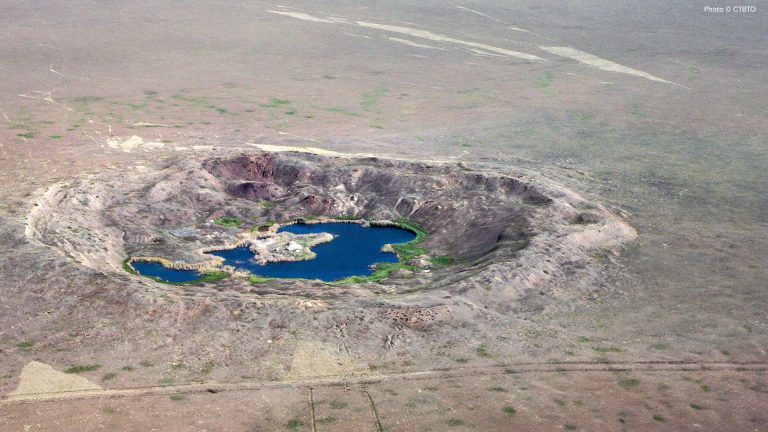
Bahiya Atchabarov, the physician who led the first clandestine medical expeditions into what was then Kazakhstan’s Semipalatinsk region in the 1950s (renamed Abay region in 2022, after 25 years as part of East Kazakhstan region), argued in 2002 once independence allowed him to publish openly that the genetic damage from Soviet nuclear testing could affect more than seven generations of descendants; a detailed account of his work describes twelve suppressed volumes of findings. In Kazakh culture, knowing one’s ancestors across seven generations, zheti ata, has long safeguarded against hereditary risk within a family; Atchabarov extended that horizon from cultural memory into biological fact. A child born in the affected region today may carry a genetic inheritance shaped by explosions seventy years before their birth, and pass it forward to children not yet conceived. Two rights follow for every child of nuclear testing, including generations not yet born: the right to know what they have inherited, and the right to be protected from it. These rights are derived from the combination of Articles 3, 7, 8, 16, and 24 of the UN Convention on the Rights of the Child (CRC). Neither of them is realised in the field.
Why this is a growing debate, not a settled one
Kazakhstan’s own diplomacy proved that local suffering can become a global legal norm: the Treaty on the Prohibition of Nuclear Weapons (TPNW) Articles 6 and 7 exist substantially because Kazakhstan and Kiribati made survivors’ testimony impossible to ignore in Vienna and New York. That achievement is real, and worth marking on this anniversary. But it also raises the bar Kazakhstan must clear at home: a state that taught the world to treat a nuclear test as an intergenerational rights emergency cannot treat its own affected children as a lower priority than the norm it exported, and the seven generations Atchabarov warned about are still waiting to see whether it will.
A leader in disarmament, an unfinished story at home
Kazakhstan closed the Semipalatinsk Nuclear Test Site on 29 August 1991 and built its national identity around denuclearisation from independence. The site itself is vast, roughly 18,000 square kilometres, spanning not just the Abay region but parts of East Kazakhstan, Pavlodar and Karagandy regions too, which is one reason a single administrative rebranding cannot resolve who counts as affected. Kazakhstan’s leadership has deepened: it co-chairs the working group on victim assistance and environmental remediation under the treaty, and in 2025 a Kazakhstani ambassador presided over its Third Meeting of States Parties. Even the Constitutional Court has acknowledged domestic protection lags this diplomacy: a 2023 ruling found that support for affected citizens remains excessively tied to residence in a designated zone, so someone loses entitlement simply for having moved, and called for further legislative development.
The generation still waiting
A 2025 study of children’s right to education in the region —based on thirty interviews with teachers, activists, doctors and social workers— found that no Kazakhstani law on nuclear compensation mentions education, even though radiation-linked conditions sit on the state’s own recognised disease list. Inclusive education only entered Kazakhstani law in 2011, and because Semipalatinsk oblast was absorbed into East Kazakhstan region in 1997 and only re-established as Abay region in 2022, no disaggregated education data exist for that entire gap. Semey City has one part-time commission for diagnosing special educational needs, serving roughly 200,000 children across the city and three districts. A rural teacher linked children’s fatigue to what in 2002 Atchabarov had named ‘Kainar syndrome’, a named condition for which affected children receive no dedicated support.
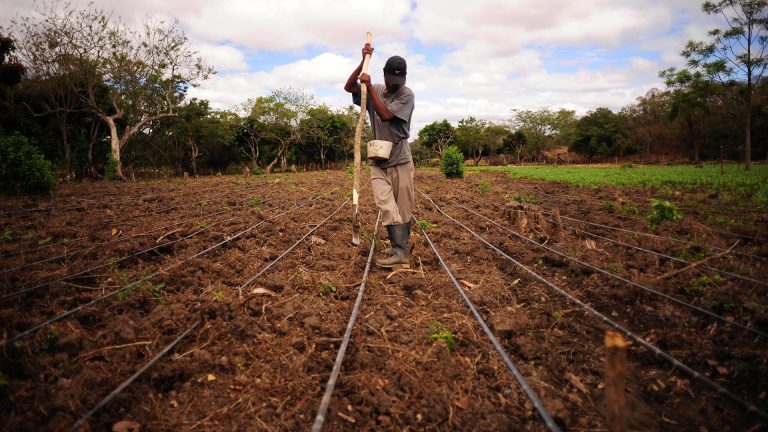
A 2025 study based on 48 interviews in Semey and Kurchatov found the same pattern from the community’s side: residents want clear information about which land is safe for farming and grazing, and do not have it; cancer, not any legal entitlement, was raised in almost every conversation. Mussabalinova, Akhmer and Khassengaliyev’s analysis of Kazakhstan’s implementation of TPNW Articles 6 and 7, which will be published in the Central Asia Yearbook of International Law in 2026, has found no unified registry of affected people and no national implementation plan, and confirmed that eligibility is still tied to residence in a risk zone during the testing years, meaning descendants with intergenerational health effects must clear a demanding evidentiary bar before their condition is recognised.
Gathered, but not protected
On 19 June 2026, the Senate of Kazakhstan’s Parliament convened a round table marking the test site’s closure. Specific, already-drafted amendments were presented: removing the zone-based pension restriction, correcting the residency contradiction the Constitutional Court had identified, ending taxation of compensation payments, extending the law and its disease list to descendants already tracked in the state’s medical registry, and publishing environmental survey results. The event’s official record states only that participants agreed on the need for ‘further consolidation of efforts’ and that a non-binding resolution is planned. Not one amendment has since been adopted. The gathering produced attention, not legal changes.
What human rights preparedness actually requires
This is where the title of this piece stops being an abstraction. Peace and humanitarian governance are not separate from a Senate round table in Astana; they are the debates that round table was meant to serve. A companion conference paper on Kazakhstan’s disarmament diplomacy calls this the humanisation of international law: local suffering at Semipalatinsk, carried upward through national policy and diplomacy, reshaping how the world now defines a state’s obligations after nuclear harm. That upward journey is real, and it is why children’s rights and intergenerational considerations carry growing weight in these debates at all. But a norm that has travelled from a village near the test site to a treaty text in Vienna is only half-finished if it cannot travel back down into that village. The right to know and the right to be protected are the return half of that journey. On the evidence of a round table that produced a promise to ‘consolidate efforts’ rather than an adopted amendment, that return journey has not yet happened for the generation Atchabarov warned about, or the six generations still to come. That is the measure that matters: not whether a state can narrate its own leadership, but whether the children who made it possible can find out what happened to them, and be protected from what comes next.