
Living in Sarajevo transformed how Iris understands memory, justice and responsibility. It taught her that memory is never neutral, that the way societies remember the past determines whose experiences are recognised and who remains invisible. During her time there, she met human rights defenders, survivors, researchers and activists whose commitment to justice continues despite decades of unresolved challenges. Listening to survivors of wartime sexual violence changed her understanding of human rights advocacy, revealing how many have spent years fighting not only for justice but also for recognition while continuing to face stigma and discrimination.
Among the most influential experiences during European Regional Master’s Programme in Democracy and Human Rights in South East Europe (ERMA) was meeting activists from BiH who, through years of persistent advocacy, secured legal recognition for one of the country’s most invisible groups: children born of wartime sexual violence.
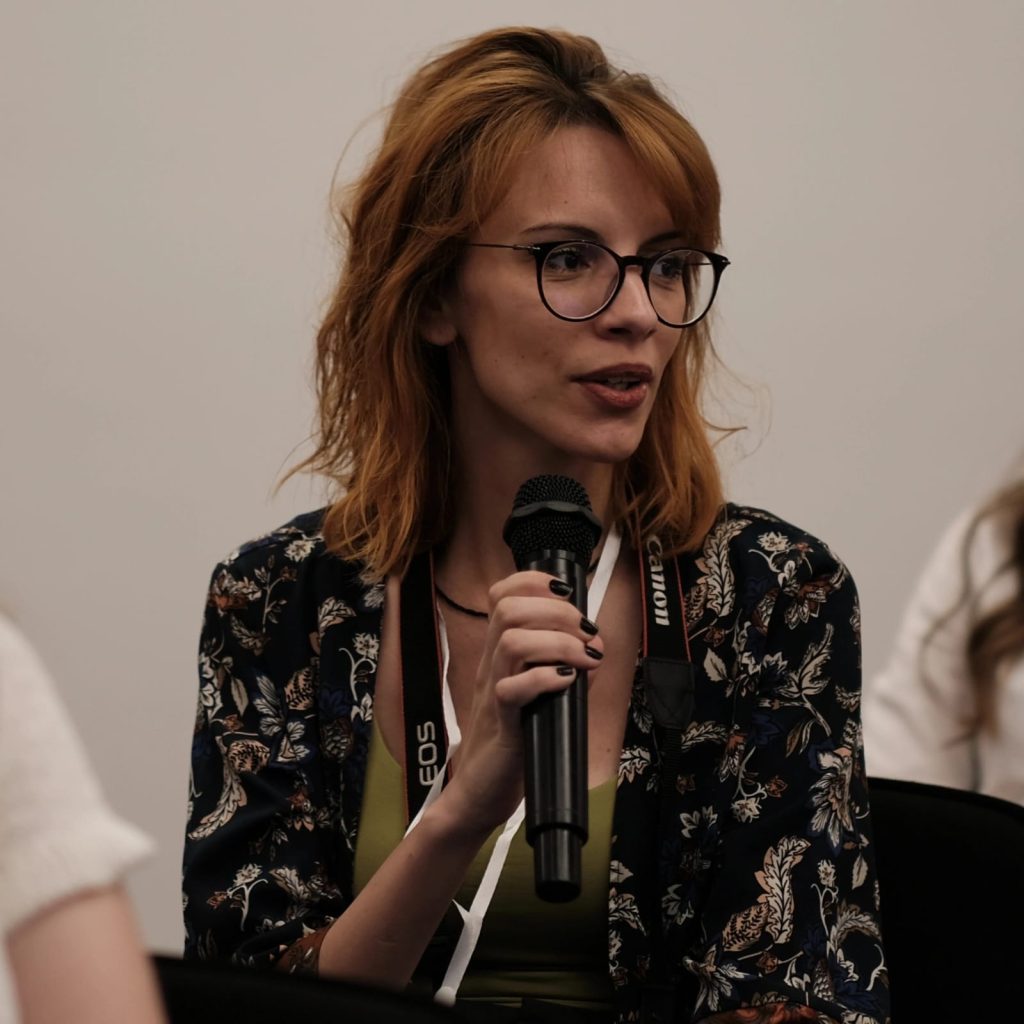
The inspiring work of the Association Forgotten Children of War (ZDR) profoundly influenced Iris’s understanding of what human rights activism can achieve. Witnessing the determination and solidarity of its members showed her that lasting change is possible even after decades of silence and exclusion. Today, BiH stands as the third country in the world to legally recognise children born of wartime sexual violence, an achievement that demonstrates how sustained activism can shape institutions and public policy while offering an important example for Croatia and other postwar societies.
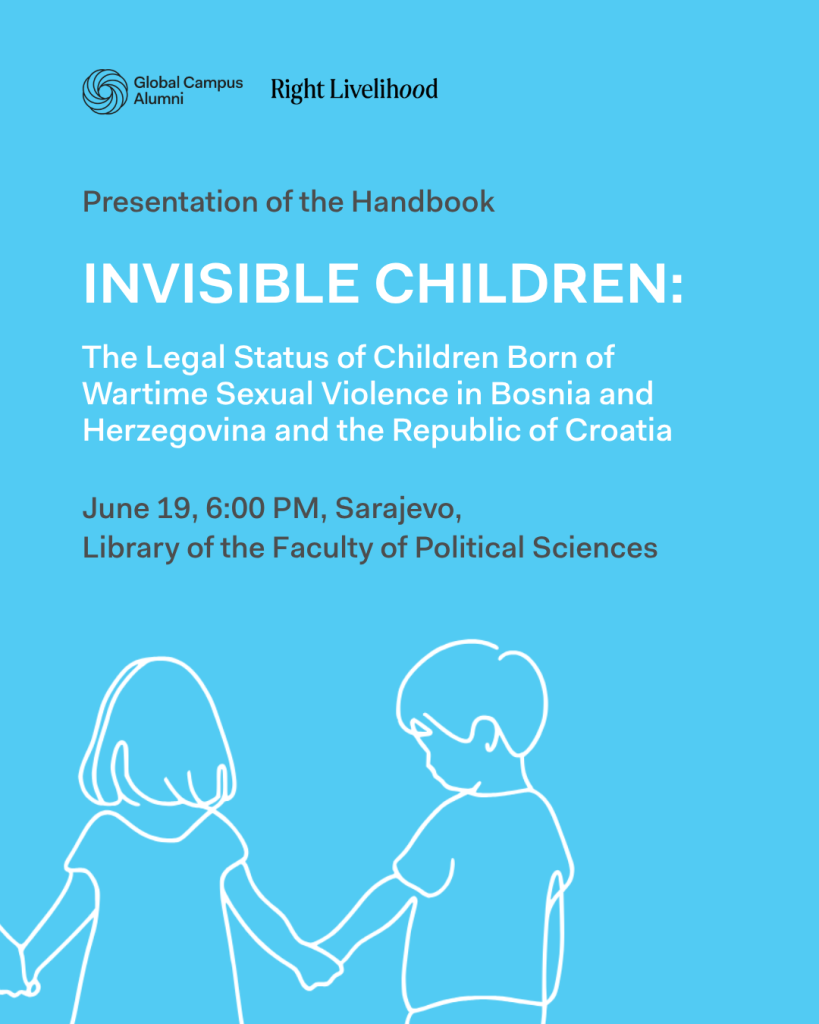
Inspired by these encounters, Iris realised that the conversation could not end in Sarajevo. Together with fellow ERMA alumni Tarik Ekmeščić and regional expert Ajna Jusić (President of Forgotten Children of War), she co-developed the toolkit Invisible Children, drawing on the knowledge and support of activists, psychologists, journalists, legal experts, researchers and survivors from BiH. The toolkit compares the legal frameworks of both countries, showing that while BiH has recognised children born of wartime sexual violence as a distinct category of civilian victims of war, Croatia, more than three decades after the war, has yet to establish a comparable legal framework. It combines comparative legal analysis with practical recommendations to amplify these children’s voices, encourage public dialogue, strengthen regional cooperation, and support policy change.
For Iris, ERMA offered far more than academic knowledge. It introduced her to people whose resilience broadened her understanding of activism and showed her that research can influence policy, challenge injustice, and support social change. Most importantly, it demonstrated that regional solidarity is not simply an idea but a force capable of inspiring people and creating lasting change.
📖 Read the full toolkit: https://doi.org/10.25330/3184
(Executive summary and Croatian version of the toolkit are available at the same link)
Written by Iris Knežević, ERMA alumna.